Complete Guide to Langtang Valley Trek
 By Bishnu Lamichhane10 min read
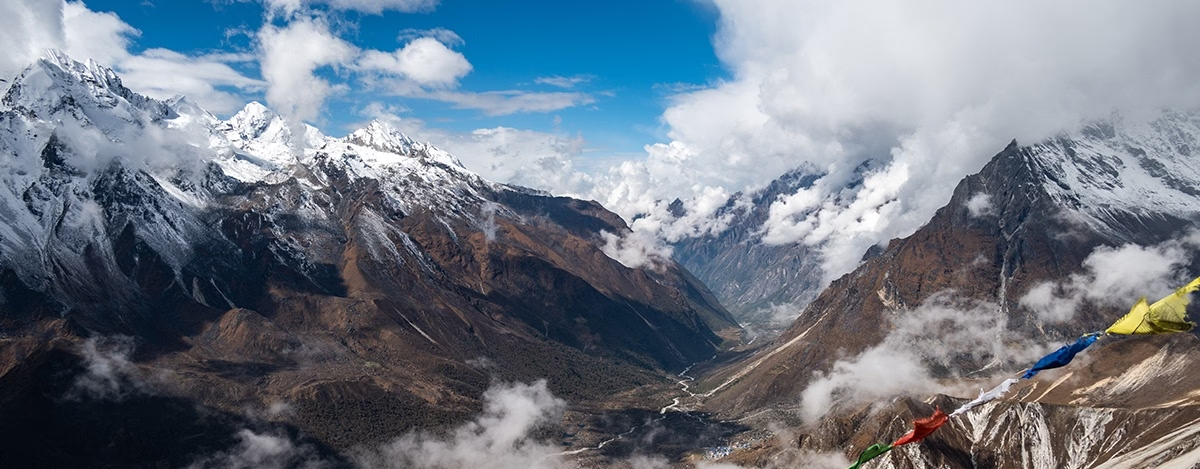
Langtang Valley, often described as the “Valley of Glaciers”, lies north of Kathmandu within Langtang National Park. Despite its accessibility from Kathmandu, the region offers a peaceful trekking experience, rich culture and traditions, and impressive mountain scenery. The region is popularly known for Langtang Lirung, Kyanjin Gompa, Kyanjin Ri, and Tserko Ri.
Whether you are an experienced trekker or a beginner, the trek can be completed with proper preparation, acclimatization, and pace. The route combines Himalayan scenery, Tamang culture, Buddhist heritage, and high-altitude landscapes within a relatively short itinerary.
Langtang Valley Trek at a Glance
Here are the key details you should know about this classic trek before starting the trek:
Trek Feature | Details |
|---|---|
Location | Langtang National Park, Nepal |
Starting Point | Syabru Besi |
Main Destination | Kyanjin Gompa |
Trek Duration | 7–10 days, depending on itinerary |
Difficulty | Moderate |
Highest Overnight Point | Kyanjin Gompa (approx. 3,830 m) |
Highest optional Point | Tserko Ri (approx. 4,984 m) |
Accommodation | Teahouse |
Best Season | Spring and Autumn |
Transportation | Road |
Major Highlights | Langtang Valley, Kyanjin Gompa, Kyanjin Ri, Tserko Ri |
Required Permits | TIMS Card and Langtang National Park Entry Permit |
Why Choose the Langtang Valley Trek?
One of the main reasons to choose the Langtang Valley trek is its proximity to Kathmandu. Trekkers begin the trek with a scenic road journey through the Trishuli and Dhunche before reaching Syabru Besi, the gateway to the Langtang Valley Trek.
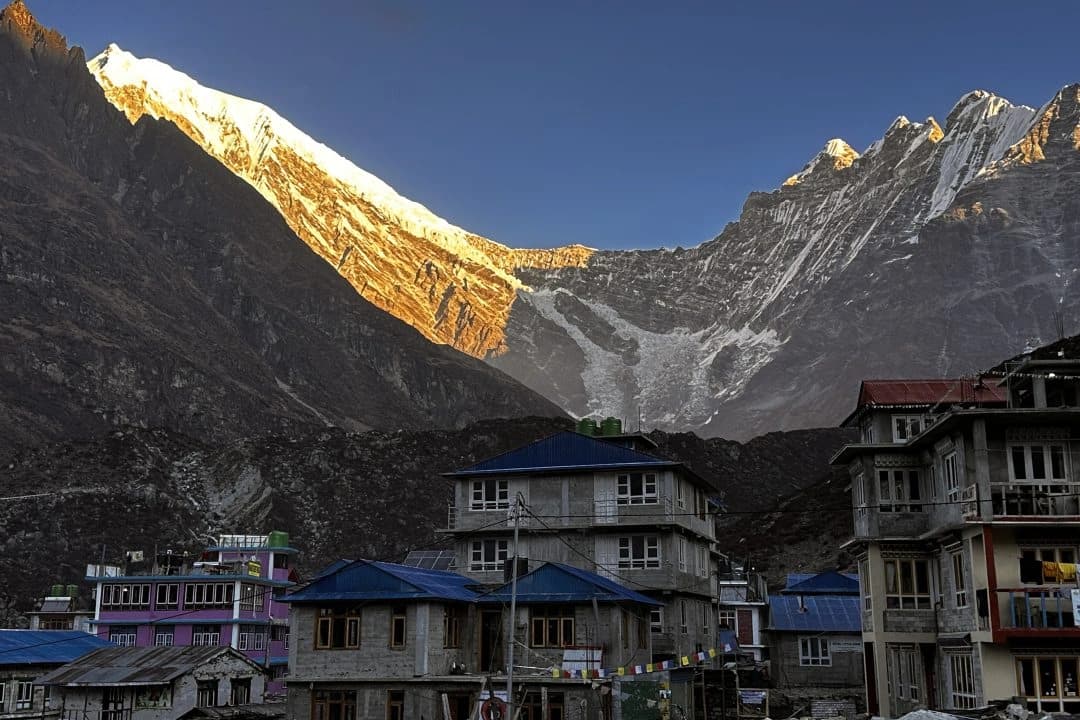
The trek can generally be completed within 7–10 days, making it suitable for first-time trekkers with limited time. The valley is home to the local Tamang communities whose cultures, architecture, and traditional dress are deeply intertwined with Tibetan Buddhism.
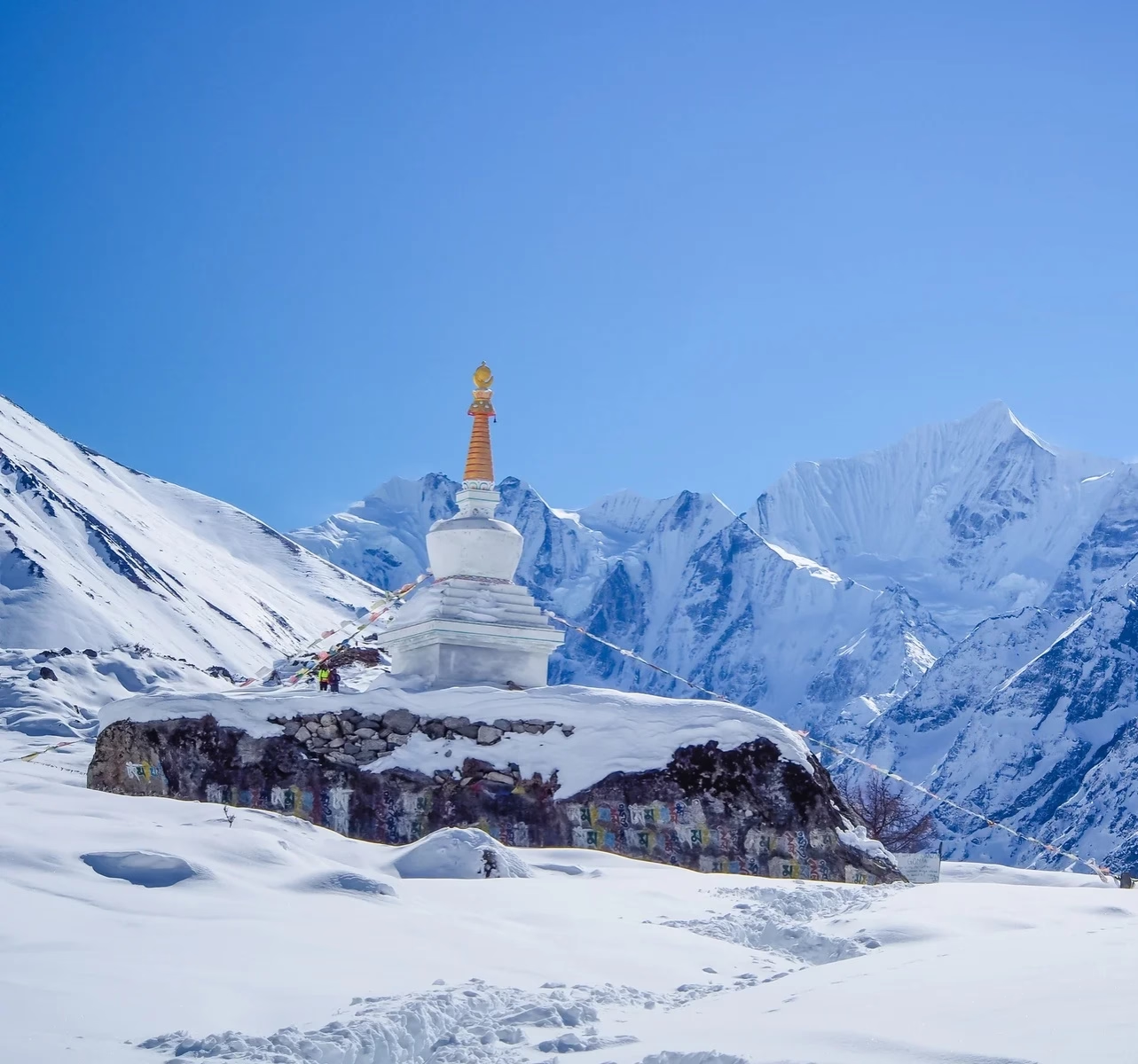
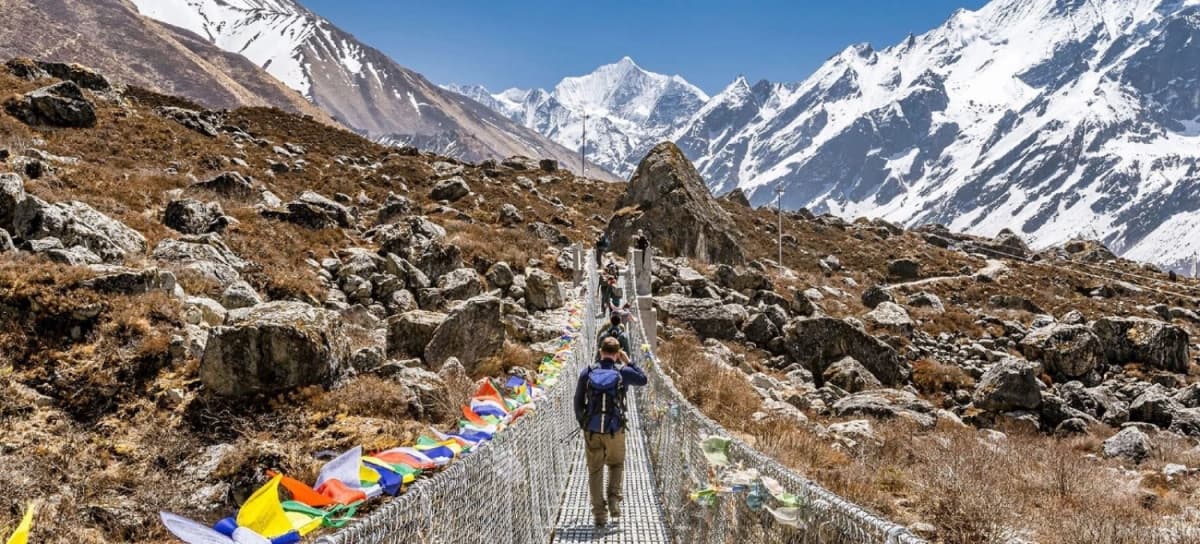
Passing through ancient monasteries, mani walls, carved stones, and spinning prayer wheels adds to the peaceful experience.
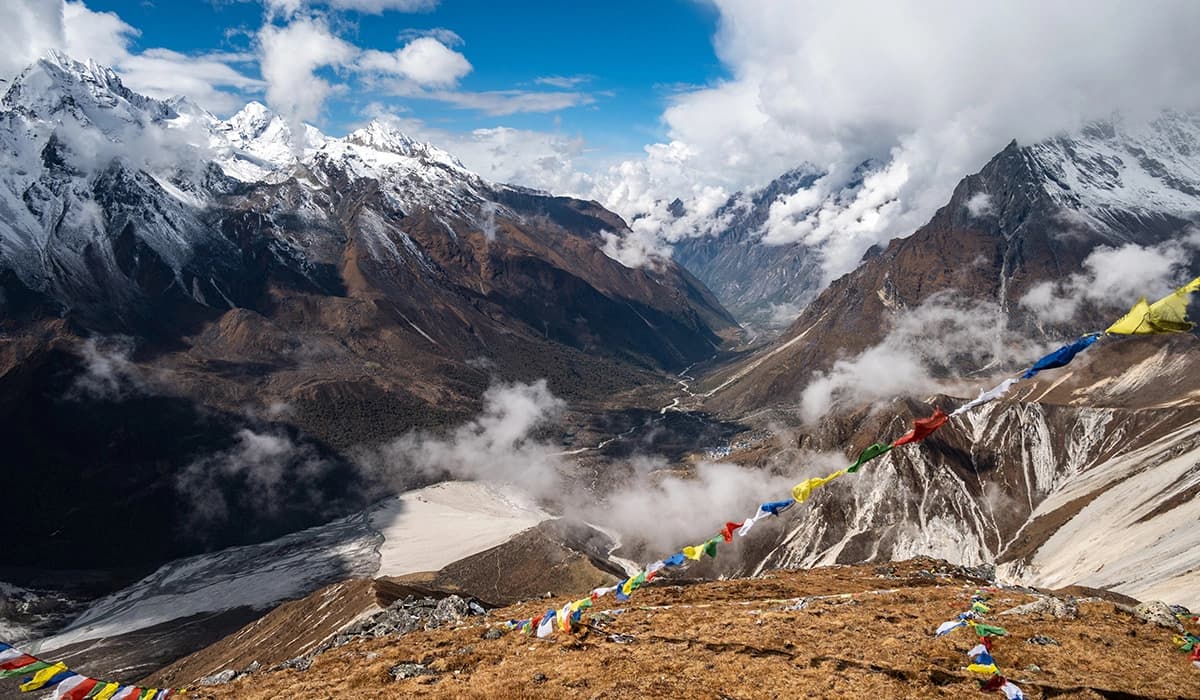
Views of the Langtang Lirung and Jugal Himal are among the highlights of the trek. The journey offers a rewarding combination of mountain scenery, culture, and Himalayan landscapes.
Where Is Langtang Valley Located?
The Langtang Valley is situated in the Rasuwa district, north of Kathmandu Valley, within Langtang National Park, Nepal’s first Himalayan national park. Syabru Besi is the usual roadhead and starting point for the Langtang Valley trek. Because the region lies close to the Tibetan Border, the local culture and traditions are highly influenced by Tibetan Buddhism.
Langtang Valley Trek Itinerary
A classic itinerary of the Langtang Valley Trek:
Day | Route | Altitude | Walking/Travel Time |
|---|---|---|---|
01 | Kathmandu to Syabru Besi | ~1,550 m | 7–9 hrs drive |
02 | Syabru Besi to Lama Hotel | ~2,380 m | 5–6 hrs |
03 | Lama Hotel to Langtang Village | ~3,430 m | 5–6 hrs |
04 | Langtang Village to Kyanjin Gompa | ~3,830 m | 3–4 hrs |
05 | Acclimatization and Exploration at Kyanjin Gompa/ Kyanjin Ri or Tserko Ri | ~3,830 m / 4,773–4,984 m | 4–7 hrs |
06 | Kyanjin Gompa to Lama Hotel | ~2,380 m | 6–7 hrs |
07 | Lama Hotel to Syabru Besi | ~1,550 m | 5–6 hrs |
08 | Syabru Besi to Kathmandu | ~1,400 m | 7–9 hrs drive |
An additional acclimatization day can be added at Kyanjin Gompa, particularly if you plan to hike to Kyanjin Ri or Tserko Ri.
How Difficult Is the Langtang Valley Trek?
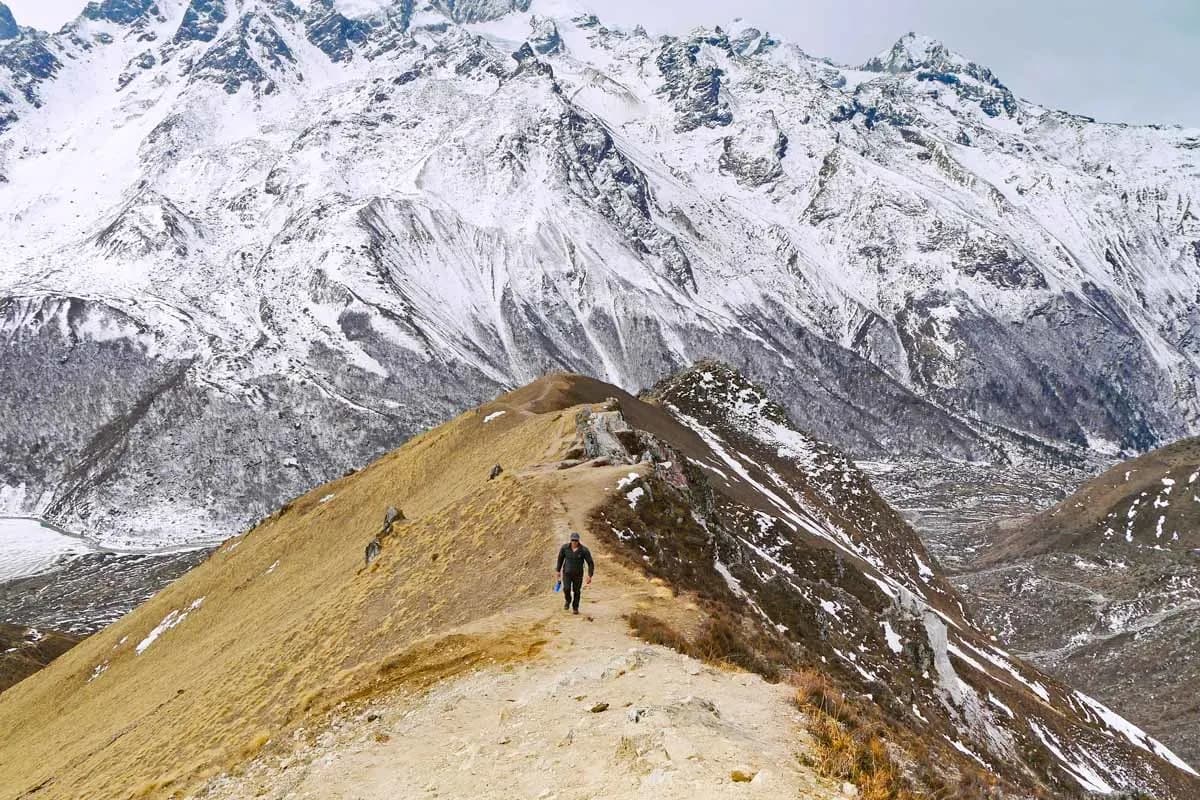
The Langtang Valley Trek is considered a moderate trek. It does not require technical climbing skills, mountaineering experience, or extensive trekking experience. The trail is well-established and comfortable, consisting of stone steps, forest dirt paths, and open valleys.
Although the trek is not technical, it still requires reasonable physical fitness and the ability to handle long walking days. The uphill/downhill walking on the stone steps and rough Himalayan trail will test your endurance. Some trekking days involve substantial elevation gain, making walking difficult. Above 3,500 meters, the reduced oxygen availability can increase the risk of altitude-related symptoms.
A reasonable level of fitness, cardiovascular endurance, and leg strength can make your Langtang Valley trek manageable. Previous trekking experience is helpful but not essential.
What Is the Highest Altitude of the Langtang Trek?
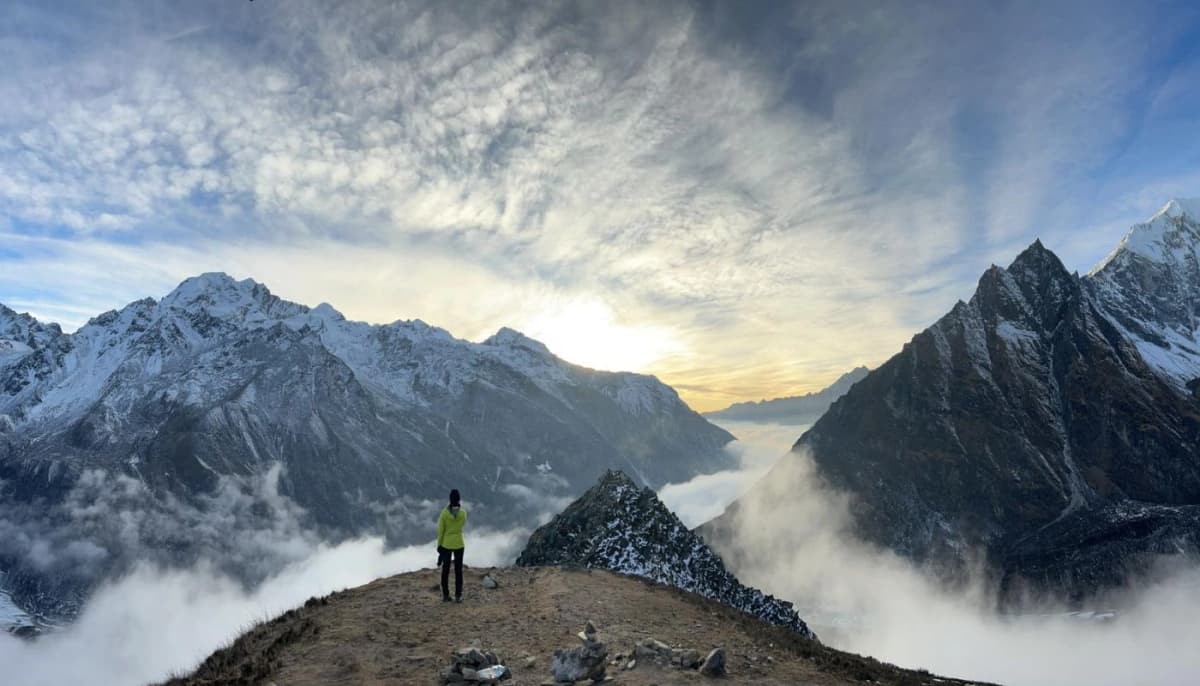
The highest overnight point on the standard Langtang Valley Trek is Kyanjin Gompa at 3,830 m. From Kyanjin Gompa, trekkers can take an optional hike to higher elevations.
Kyanjin Ri reaches approximately 4,773 m, while Tserko Ri reaches approximately 4,984 m. These are the highest points of the itinerary if you include the optional hikes.
The hike to Tserko Ri reaches nearly 5,000 meters and provides a challenging high-altitude experience without requiring a multi-week commitment.
How to Get to Langtang Valley from Kathmandu?
The journey starts with a scenic drive from Kathmandu to Syabru Besi. The drive takes around 7 to 9 hours to complete, depending on road and traffic conditions. The route follows the Pasang Lhamu Highway, along the Trishuli River, passing through local villages and vibrant markets.
There are two main transportation options:
Transport Type | Estimated Cost (USD) | Comfort and Convenience |
|---|---|---|
Local Bus | $8 – $10 per person | Budget-friendly but crowded; frequent stops and longer travel time |
Private Jeep (4WD) | $150 – $200 per vehicle | Highly recommended; significantly faster, comfortable, and can be shared among a group. |
Langtang Valley Trek Cost
The cost of the Langtang Valley Trek depends on the duration of your itinerary, trekking style, transportation, accommodation, food, permits, guides and porters, and personal expenses.
A typical 7-10-day Langtang Valley trek costs around $500 to $650 USD per person for a
Langtang Valley Trek
View detailsstandard group-joining package. A fully private package may cost around $900 to $1,200 USD per person, depending on itinerary, package type, accommodation, and services included.
Standard Langtang Valley Trek Cost
Category | Estimated Cost (USD) | Estimated Cost (NPR) |
|---|---|---|
Permits | $43 total | ~NPR 5,700 total |
Daily Accommodation | Approximately $5 – $10 / night | NPR 650 – NPR 1,300 / night |
Daily Meals | Approximately $25 – $35 / day | NPR 3,300 – NPR 4,600 / day |
Transportation | $8 – $200, depending on your transport type | NPR 1,200 – NPR 26,000 |
Licensed Guide | $25 – $35 / day | NPR 3,300 – NPR 4,600 / day |
Trekking Porter | $20 – $25 / day | NPR 2,600 – NPR 3,300 / day |
Additional Expenses
Carry an extra $10 to $15 USD (approx. NPR 1,300–2,000) per day in cash to cover potential additional expenses:
Hot Showers: $2 to $5 per shower
Device Charging: $2 to $4 per electronic device or power bank
Wi-Fi: $3 to $5, where available
Drinking Water: $1 to $3 per liter of boiled/filtered water (bring water purification tablets to save money)
Staff Tipping: Budget roughly $80 to $120 USD total for your guide and $60 to $100 USD total for your porter as a standard tip at the end of the trek
Short Langtang Valley Trek
View detailsNOTE: Tipping is discretionary and generally depends on the trek duration, quality of service, and group size.
Langtang Valley Trek Permit
Whether you trek independently or in a group, you need to have a permit to trek in the Langtang Valley. Two permits are generally required, which can be secured from the Nepal Tourism Board office in Kathmandu or right at the park checkpoint.
Langtang National Park Entry Permit: Costs NPR 3,000 (approx. $23 USD) per person for foreign nationals. (SAARC citizens pay NPR 1,500).
TIMS (Trekkers' Information Management System) Card: Costs NPR 2,000 (approx. $15 USD) per person.
Note: Permit fees and regulations can change, so check the latest information from the Nepal Tourism Board. Carry at least 4–6 passport-sized photographs and printed copies of your passport to fill out permit registration applications smoothly.
Which Season Is Right for Trekking in Langtang?
Choosing the right season can significantly improve your trekking experience. The most popular season for trekking in Nepal is during spring and autumn.
Spring (March-May)
Spring is a fantastic season for trekking in Nepal. The season is known for its incredible beauty of the Himalayas, colorful hills, and crisp and comfortable weather. During this season, rhododendrons and other wildflowers bloom, making postcard-perfect views of the surrounding valleys. Mornings are often clear, while clouds occasionally roll in during the late afternoons.
Autumn (September-November)
Autumn is the popular season for trekking and tours in Nepal. After monsoon season, skies generally become clearer, often providing good visibility of the surroundings. The weather is warm and comfortable for walking on the trail. The clear views of the Himalayas and surrounding hills make your journey worthwhile.
Monsoon (June-September) and Winter (December-February)
During monsoon season, heavy rainfall makes the trek difficult to complete. Slippery trails, leeches, and potential landslides along the road to Syabru Besi can make trekking difficult.
Winter brings extreme cold, frozen water pipes, and heavy snow blocking high viewpoints, while many upper teahouses close.
Places to Explore During the Langtang Valley Trek
Kyanjin Gompa: A serene, centuries-old Buddhist monastery nestled in the upper valley basin, surrounded by soaring peaks.
The Yak Cheese Factory: Located right in Kyanjin Gompa, you can step inside this famous local facility to buy and sample authentic, artisanal cheese made fresh from high-altitude yaks.
Langtang Lirung Glacier: Take a short side hike from Kyanjin Gompa to stand near the dramatic, debris-covered lateral moraine of the massive Langtang Lirung glacier.
Mani Walls and Chortens: The trail passes mani stones, prayer wheels, and chortens. As a sign of respect, trekkers should generally pass clockwise around sacred monuments and avoid disturbing them.
Langtang Valley Trek Packing List
To avoid carrying an unnecessarily heavy and unorganized backpack, pack only the essentials you need for the trek.
Clothing Layers
Moisture-wicking synthetic or merino wool base layers (2 tops, 1 bottom)
Fleece jacket or lightweight pullover
Down jacket with a warm hood
Waterproof and windproof jacket and pants
2-3 pairs of quick-dry trekking pants
Footwear & Headwear
Hiking boots
2-3 pairs of wool trekking socks
Lightweight running shoes
Warm fleece beanie or wool hat
UV-protection sunglasses and a wide-brimmed sun hat
Essential Gear & Personal Items
40 to 50 L backpack if carrying your own gear
Sleeping bag rated down to -10°C
Trekking poles
Refillable water bottles
Water purification tablets
A personal first-aid kit
Quick-drying microfiber travel towel and basic toiletries
Langtang Valley Trek for Beginners
For first-time Himalayan trekkers, the Langtang Valley Trek can be the right option to introduce them to high-altitude trekking. It is a relatively short itinerary, with an established teahouse network and a non-technical trail; it can be completed within 7-10 days.
Maintaining a steady pace, ensuring enough hydration, allowing enough time for acclimatization, and understanding basic high-altitude trekking practices can make this trek more manageable.
If you experience a persistent headache, dizziness, nausea, or shortness of breath, do not climb higher. Inform your guide or companions immediately. If symptoms of Acute Mountain Sickness (AMS) worsen or do not improve, descending to a lower elevation is important for safety. Seek medical help when necessary.
Final Thoughts
The Langtang Valley Trek balances the pristine beauty of nature with deep cultural authenticity within a relatively short itinerary. Walking through scenic forest trails, charming villages, traditional settlements, and high-altitude landscapes makes the journey an accessible trekking adventure in the Langtang Valley. Although the route is non-technical, trekkers should prepare for long walking days, changing weather conditions, and increasing elevation. With appropriate preparation, steady pacing, and acclimatization, trekkers can complete the route successfully.