

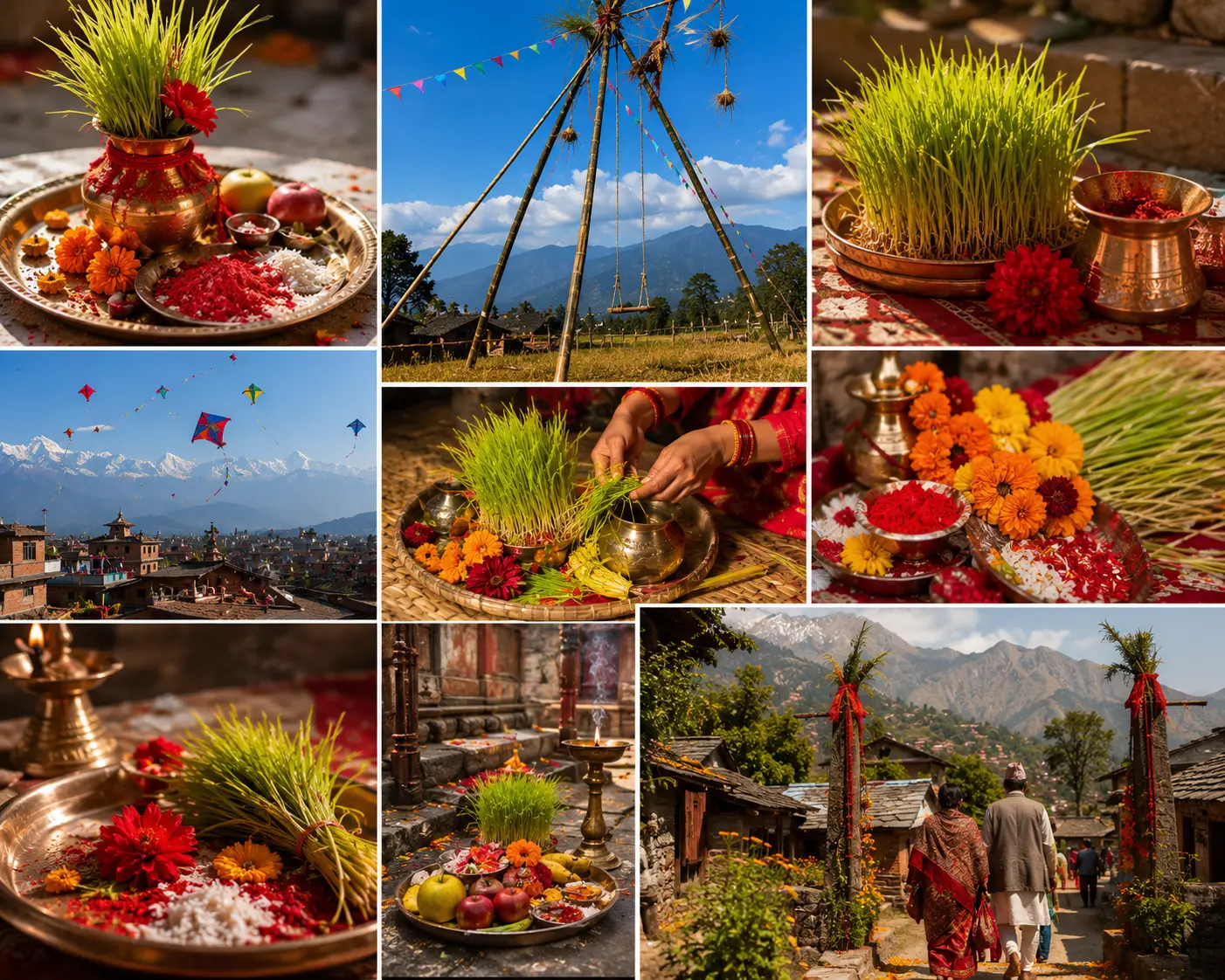
In Nepal, there are many festivals and occasions which celebrates winning of deities over evil, and Dashain is one of them. Dashain, also known as Bada Dashain or Vijaya Dashami, is the biggest and longest Hindu festival celebrated in Nepal. Dashain holds a special place in the hearts of the Nepali people. As it symbolizes the victory of good over evil, it is one of the country’s most cherished cultural celebrations. The festival lasts for 15 days, beginning on Ghatasthapana (the new moon day) and ending on Kojagrat Purnima (the full moon day). It is usually celebrated during October or November, according to the Hindu lunar calendar. Dashain is also one of the busiest travel seasons in the country due to the long holiday break. Family reunions for sightseeing, adventure, or a little escape from their daily routine are common among many people all around Nepal.
Dashain is a time of devotion, family reunions, and joyful celebrations. During the festival, people worship Goddess Durga, visit relatives, wear new clothes, prepare delicious traditional foods, receive Tika and Jamara along with blessings from elders and celebrate together with love and gratitude. People travel from different parts of Nepal and abroad to be with their loved ones. It is a festival that strengthens family bonds, preserves cultural traditions, and brings happiness to people across Nepal. Nowadays, these festivals are celebrated with different religious and cultural programs like singing, dancing, praying, and dramatising the role of Durga and Danav (demon).
During Dashain, government offices close for the duration of the holiday, so many people take the opportunity to return home to visit family and celebrate the festival. Families spend time together sightseeing, having adventures, or escaping their everyday lives. This is a popular activity for many people all over Nepal.
History of Dashain
The festival celebrates the various victories of Hindu Gods over Demons, such as lord Ram defeating Ravan in a duel and Goddess Durga defeating the buffalo-demon Mahishasura, as well as many other demons. The first nine days of the festival are symbolized as the battle between different forms of Durga and Mahishasura, and the victory of Durga over Mahishasura on the tenth day.
The festival is important since it reminds every one of the universal principles of truth, justice and virtue that must prevail over deception, injustice and wickedness. It is believed that if she is properly worshipped and pleased, good luck is bound to follow. However, if the goddess is angered by negligence, misfortunes are said to occur.
The Days of Dashain
With each day having different significance, the most important days are the first, seventh, eighth, ninth, tenth, and fifteenth days, all in honour of the great battle.
Day 1 (Ghatasthapana)
Ghatasthapana is the first day of Bada Dashain, the first day of the bright half of the lunar
calendar in the month. A male family member will soak Jamara seeds (usually barley seeds), which is to be planted in the moist sandy soil in the following day; but nowadays women also equally do these familial rituals. The Jamara is placed in a room called “Dashain Ghar” where sunlight does not reach, and it will be covered, especially by banana leaves to make plants
yellowish. By the ninth day, the barley seeds germinate and reach a height of five or six
inches, since this is grown in the dark, the seedlings look like yellowish grass. On the tenth day of the festival, the yellow grass is used with tika to bless people with prosperity and happiness.
Day 7 (Phulpati)
Phulpati is celebrated on the seventh day of Dashain and marks the beginning of the festival’s main celebrations. The word ‘ Phulpati ‘ is a combination of two words: ‘ phul ‘, meaning flower, and ‘pati ‘, meaning leaf.
On Phulpati, one of the most important traditions of Dashain takes place. The holy Phulpati, which includes jamara, flowers, banana stalks, sugarcane, and other sacred items used in Dashain worship, is brought from Gorkha Durbar, the ancestral home of Nepal’s former royal family, to Hanuman Dhoka Durbar in Kathmandu. This journey takes about three days on foot and has been followed for more than 200 years.
When the Phulpati arrives in Kathmandu, a grand ceremony is held to welcome it. The Nepal Army, Nepal Police, traditional Panche Baja, and military bands take part in the celebration,
making it one of the most colourful and important events of Dashain. Many people gather to watch and celebrate this special occasion.
Since 2008 when the monarchy system was removed from the country, the two-century-old tradition has changed so that the holy offering of fulpati goes to the residence of the Prime Minister, continuing a tradition.
On these days, People clean their houses and decorate them with flowers, prepare for the major celebrations that follow in the coming days.
Day 8 (Maha Ashtami)
The festivities will continue as Maha Ashtami. This is the day when the most demonic of Goddess Durga’s manifestations, the blood-thirsty Kali, Thousands of goats, sheep, buffaloes, ducks and hens are sacrificed in Goddess Temple almost from every home. Blood, symbolic for its fertility, is offered to the Goddesses, and the night of this day is called Kal Ratri (Black Night). In the Newar Community, Kuchi Bhoe is prepared, during which people ritually eat two pathi (approx. 6-8 kg) of beaten rice along with various dishes on a banana leaf.
Day 9 (Maha Nawami)
The ninth day of the festival is known as Maha Nawami. Thousands of devotees go and pay respect to the goddess all along the day. This day is also known as Viswakarma day. On this day, the god of creativity, Vishwa Karma, is worshipped in the form of vehicles, equipment, and tools in the belief that this worship will prevent accidents in the future.
It is the only day of the year when the Taleju Temple at Hanuman Dhoka opens its doors to the public. On this special occasion, thousands of devotees visit the temple to offer prayers and seek blessings from Goddess Taleju Bhawani. From early morning until evening, the temple area remains crowded with devotees showing their faith and devotion.
Day 10 (Tika/Vijaya Dashami)
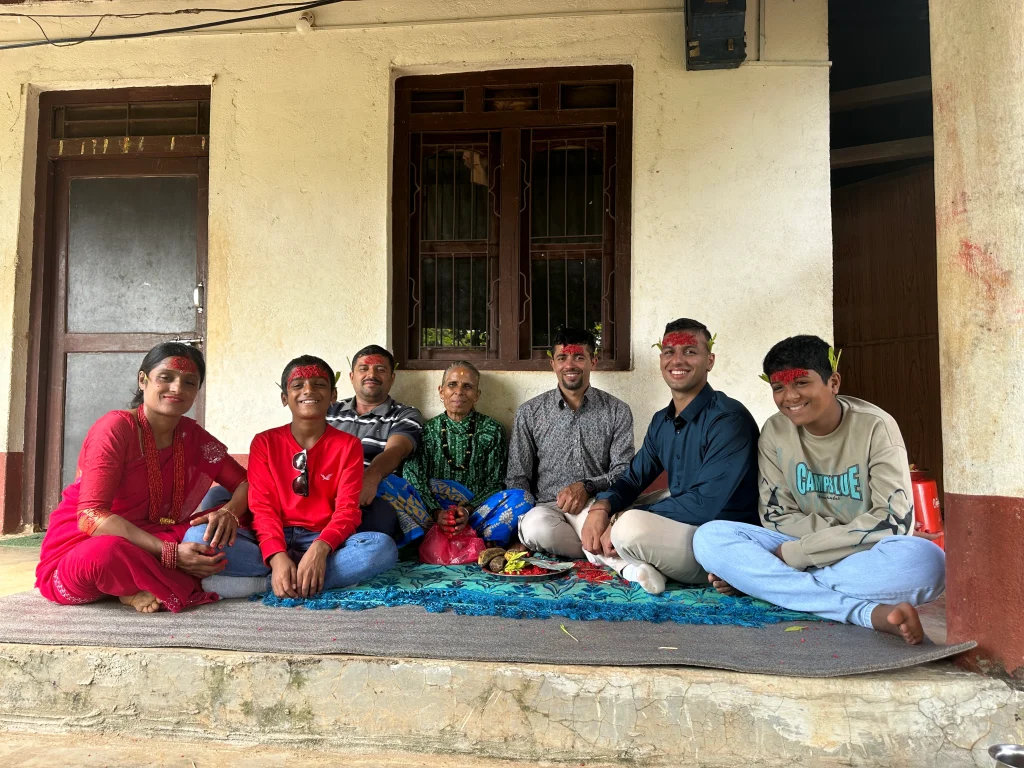
The tenth day of Dashain is celebrated as Vijaya Dashami, also known as Tika. It is one of the most important days of the festival when family members gather together to receive blessings from their elders. On this auspicious day, elders put tika (a mixture of rice, yogurt, and vermilion) and jamara (the sacred grass grown from the first day of Dashain, Ghatasthapana) on the forehead of younger family members. Along with tika and jamara, elders also give Dakshina (money) as a symbol of love, good wishes, and blessings for a prosperous life.
The celebration continues for the next few days until the full moon day. During this time, relatives and family members who live far away come together to meet, exchange happiness, and receive blessings from their elders. The remaining days of Dashain are filled with family gatherings, feasts, cultural activities, and joyful celebrations, making it a time of reunion, happiness, and togetherness.
The 15th day, Kojagrat Purnima
The final day of Dashain is celebrated on the full moon day and is known as Kojagrat Purnima. The word Kojagrat means “Who is awake?”. According to Hindu belief, Goddess Laxmi, the goddess of wealth and prosperity, visits the earth on this night. It is believed that she blesses those who stay awake throughout the night with happiness, wealth, and prosperity.
On this day, devotees worship Goddess Laxmi, light lamps, and spend the evening in prayers and celebrations. Kojagrat Purnima marks the official end of the fifteen-day Dashain festival, bringing the grand celebration to a peaceful conclusion.
Dashain 2026 will be celebrated from Sunday, 11 October to Sunday, 25 October 2026 (15 days).
| Day | Date (2026) | Day of Week | Festival |
|---|---|---|---|
| 1 | 11th Oct 2026 | Sunday | Ghatasthapana |
| 2 | 12th Oct 2026 | Monday | Dwitiya |
| 3 | 13th Oct 2026 | Tuesday | Tritiya |
| 4 | 14th Oct 2026 | Wednesday | Chaturthi |
| 5 | 15th Oct 2026 | Thursday | Panchami |
| 6 | 16th Oct 2026 | Friday | Shasthi |
| 7 | 17th Oct 2026 | Saturday | Phulpati |
| 8 | 18th Oct 2026 | Sunday | Saptami |
| 9 | 19th Oct 2026 | Monday | Maha Ashtami |
| 10 | 20th Oct 2026 | Tuesday | Maha Navami |
| 11 | 21st Oct 2026 | Wednesday | Vijaya Dashami |
| 12 | 22nd Oct 2026 | Thursday | Ekadashi |
| 13 | 23rd Oct 2026 | Friday | Dwadashi |
| 14 | 24th Oct 2026 | Saturday | Trayodashi |
| 15 | 25th Oct 2026 | Sunday | Kojagrat Purnima |
The Nine Forms of Goddess Durga (Navadurga)
| Day | Form of Durga |
| Day 1 | Shailaputri |
| Day 2 | Brahmacharini |
| Day 3 | Chandraghanta |
| Day 4 | Kushmanda |
| Day 5 | Skandamata |
| Day 6 | Katyayani |
| Day 7 | Kalaratri |
| Day 8 | Mahagauri |
| Day 9 | Siddhidatri |
Each of the nine forms of Goddess Durga has its own significance and symbolizes different virtues, strengths, and blessings.
Importance of Dashain Festival
- Dashain plays an important role in conserving the cultures, traditions and religious customs of Nepal.
- One of the most meaningful traditions of Dashain is family reunions. People travel from different parts of Nepal and abroad to celebrate with their loved ones. During Vijaya Dashami, younger family members receive tika and jamara from their elders along with blessings for good health, happiness, prosperity, and a long life. This tradition strengthens family bonds and makes Dashain a festival of love, respect, and togetherness.
- Dashain also supports Nepal’s tourism and economy. It encourages domestic travel, shopping, cultural events, and traditional celebrations while attracting international visitors who want to experience Nepal’s vibrant festivals and unique heritage.
- Another significance of Dashain is that it marks the end of the monsoon season and the beginning of the harvest. It is a time when people thank nature for a good harvest and pray for peace, happiness, and prosperity in the coming year.
Special facts about Dashain
Dashain used to be celebrated in Chaitra (March-April). However, during this season, due to the heat, food could not be kept hygienic for several days, and many people fell sick due to food. So, Chaitra Dashain was moved to Asoj/ kartik (October/ November ).
Family reunions
Dashain is not only Nepal’s biggest festival but also a special time for family reunions and travel. During the festival, many people return to their hometowns to celebrate with their loved ones. At the same time, many families plan short trips for sightseeing, adventure, or relaxation before and after the main celebrations. These journeys provide a welcome break from busy daily life, allowing families to spend quality time together, explore the beauty of Nepal, and create lasting memories. The climate is ideal with clear skies, cool air, and spectacular mountainous scenery. Students and professionals finally have uninterrupted time off, making it possible to visit more places in one trip.
You will see colourful kites of different shapes all over the sky; not only children but people of all ages fly kites on their roofs during the Dashain holiday, which is also one of the enjoyable traditions since the past.
Members and relatives of the family spend their time together playing cards, either for fun or for bets, all day long. This is one of the most popular activities during the festival, but gambling for money is generally prohibited under Nepalese law.
Buying and wearing new clothes is an important part of the festival. Almost all the shops in the country have festival offers and discounts. This makes shopping more attractive to people. Clothes are the items that have the highest sales during the festival.
Another unique tradition of Dashain is the village swing, known as ping. These swings are made from bamboo, and ropes are built in many communities a week before Ghatasthapana and dismantled only after the festival of Tihar, which comes after Dashain. People of all ages
enjoy swinging, but it is especially popular among children. According to a popular Nepali belief, everyone should swing at least once during Dashain, especially around Vijaya Dashami. This tradition is known as “Dharti Chhodnu” (leaving the earth), symbolizing lifting oneself off the ground at least once during the year. While this is a cultural belief rather than a religious practice, it continues to be a beloved Dashain tradition.
Animal Sacrifices
Thousands of animals such as goats, buffaloes, ducks, rams, etc. are slaughtered in Dashain every year. It has been considered an important ritual since it is believed that the goddesses are appeased by such sacrifices. Almost all the temples, especially the Durga and Kali temples of the country, are offered thousands of sacrifices. Ashtami and Navami are the days when the sacrifices reach their peak. While thousands of animals are sacrificed to please the goddesses, people also slaughter animals for feasts. Since a large number of feasts and gatherings are organised throughout the fifteen days of the festival, the demand for meat goes up considerably. Hence, to meet the demand, the slaughtering of animals becomes considerably higher and necessary during the festival. However, for the past few years, the animal rights activists in the country have been continuously opposing these acts of slaughtering animals in such a manner. They have been requesting people to stop such inhuman acts of killing innocent animals and instead have suggested them to offer fruits and vegetables to the Goddesses since they believe that it is nowhere mentioned in the Hindu religious books that such sacrifices appease the gods and goddesses. They believe that devotion, kindness, and sincere prayers are more important than animal sacrifice. Today, both traditional and symbolic forms of worship can be seen during Dashain, reflecting changing beliefs and practices in Nepal.
Dashain Foods
Food is one of the highlights of the Dashain festival. Families prepare a variety of delicious dishes and enjoy festive meals together. Traditional foods such as Sel Roti (deep fried rice flour bread), chevon /mutton, kheer (rice pudding), fruits, sweets, and Yomari (especially in Newar communities) are commonly enjoyed during this time.
The menu varies from one family to another depending on their culture, traditions, and whether they prefer vegetarian or non-vegetarian food. Many households prepare a wide variety of homemade dishes and invite relatives and friends to share festive meals. Dashain is not only a celebration of culture and family but also a time to enjoy Nepal’s rich and diverse cuisine.
Dashain in the Modern Era
In the modern age, while the core values of Dashain remain unchanged, the way it is celebrated has evolved. Today, technology and social media have made it easier for families and friends to stay connected, even when they are far apart. Those who cannot return home for Dashain often exchange greetings, blessings, and even receive Tika virtually through video calls. People also share festive moments, family photos, and Dashain wishes on social media, allowing them to celebrate together despite the distance.
Why should tourists experience Dashain?
Tourists should experience Dashain to see the real beauty of Nepal’s culture and traditions. During Dashain, the sky is clear, the weather is pleasant, and the whole country feels peaceful and joyful. Flowers bloom in home gardens, temples are filled with devotees, and every place reflects the festive spirit.
As Nepal’s biggest festival, Dashain brings families and communities together. Tourists can see traditional swings (ping) in villages, where people gather and enjoy happy moments. They can also experience the special phulpati celebration at Hanuman Dhoka, where traditional rituals and cultural performances take place. Visiting Taleju Temple during this time gives visitors a chance to see the strong faith and devotion of Nepali people.
Experiencing Dashain allows tourists to enjoy Nepal’s traditions, taste the warmth of Nepali hospitality, and become part of a festival filled with happiness, blessings, and togetherness.
Trekking During Dashain
Dashain is one of the best times for trekking in Nepal. During this season, the weather is clear, the sky is blue, and the trails offer beautiful views of mountains and landscapes. You can see local people enjoying their holidays in villages, spending time with family, and celebrating the festival together. At the same time, many national and international trekkers can be seen exploring Nepal’s trekking routes because of the pleasant weather, holiday season and peaceful environment.
While trekking during Dashain, visitors can experience not only the natural beauty of Nepal but also the warmth of local communities. They can witness traditional celebrations, village lifestyles, and the happiness of people coming together during this special festival. It is a wonderful opportunity to enjoy Nepal’s nature, culture, and hospitality at the same time.
Some popular trekking destinations during Dashain are:
- Everest Base Camp Trek
- Mardi Himal Trek
- Manaslu Circuit Trek
- Langtang Valley Trek
- Ghorepani Poon Hill Trek
- Annapurna Base Camp Trek
- Upper Mustang Trek
Tips for Tourists During Dashain
- Plan and book your trip earlier, because offices will be closed and transportation, hotels, and domestic flights can become busy during this time.
- Book trekking services early because Dashain falls during one of the best trekking seasons. Popular trekking routes can become busy, so arranging guides, permits, accommodation, and transportation in advance is recommended.
- Take appropriate clothes for the weather changing.
- Ask before photographing temples, old places and local people.
- Carry enough cash while traveling
- Be prepared for crowded transportation. Before and after the main Dashain days, thousands of people travel to their hometowns.
- Dress appropriately at religious places.
FAQs
Is trekking possible during Dashain?
Yes. Dashain is one of the best seasons for trekking because of clear skies, pleasant weather, and beautiful mountain views.
Which trekking routes are popular during Dashain?
Popular routes include Everest Base Camp, Annapurna Base Camp, Mardi Himal, Langtang Valley, Manaslu Circuit, Ghorepani Poon Hill, and Upper Mustang.
Are shops and offices open during Dashain?
Many government offices and businesses remain closed during the main Dashain holidays. However, hotels, restaurants, and tourist services in major areas usually continue operating.
Posted on