

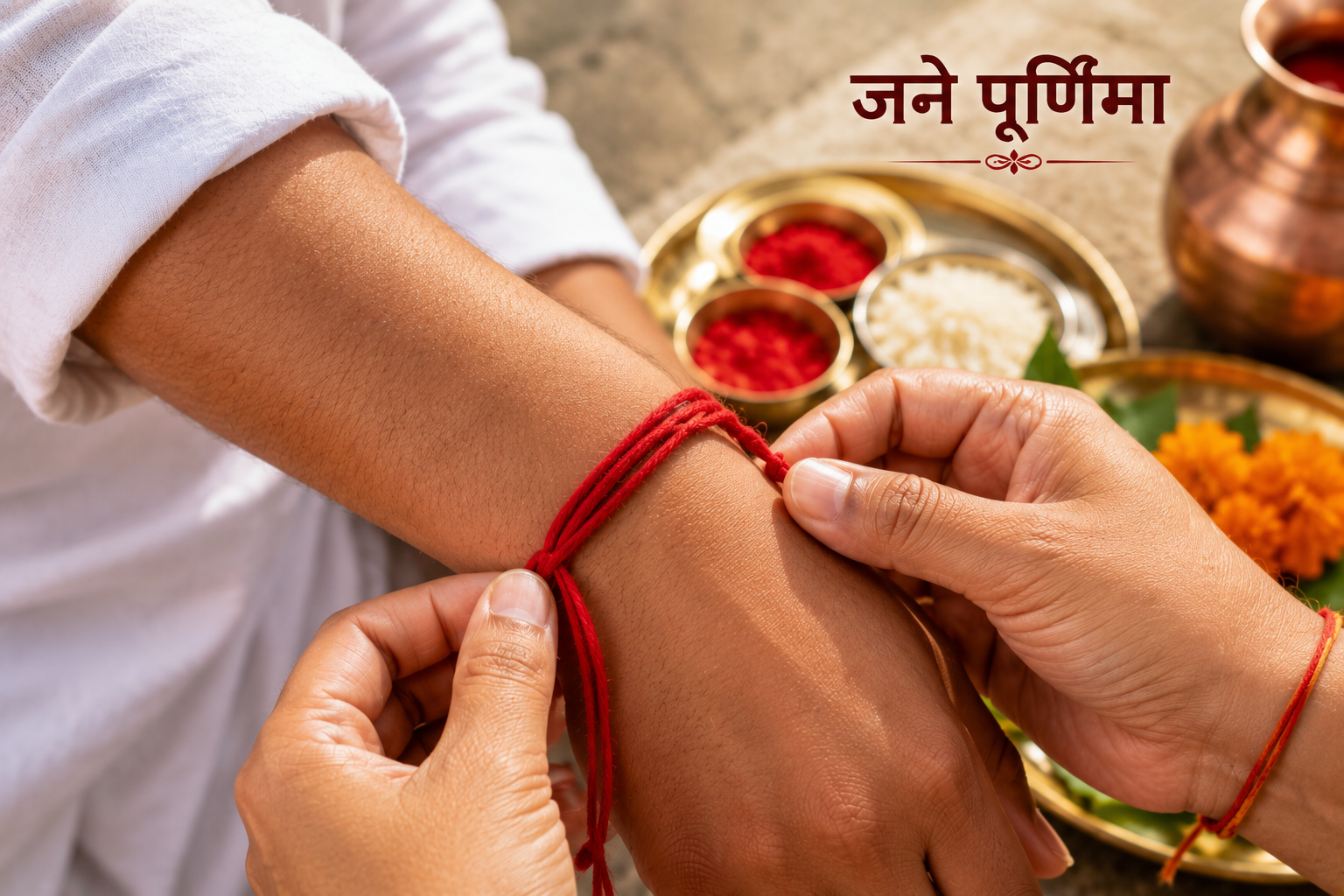
Nepal has different festivals, where every ethnic group celebrates festivals in their own way. Likewise, Janai Purnima is one such festival, popularly known as the sacred thread festival, observed by Hindus. Mainly Brahmins and the Chhettri ethnic group celebrate Janai Purnima.
The arrival of Janai Purnima marks festival season begins. Janai means “sacred thread”, and Purnima means “Full Moon”. This festival is celebrated every year on the full moon of August. The festival represents spiritual cleansing and devotion. Changing Janai and tying doro symbolise protection, faith, purification, and family traditions and strengthen bonds within Hindu families and have a high religious and cultural significance among Hindu boys and men. This year, Janai Purnima will be celebrated on Friday, August 28, 2026.
Myths and stories behind Janai Purnima festival in Nepal
According to Hindu mythology, during a battle with demons, Lord Indra’s wife gave him a protective thread. The thread is believed to have given him the strength to defeat the demon king Bali. This story is one of the origins of the sacred thread tradition. Today, men from the Brahmin, Kshatriya, and Vaishya communities wear the janai.
Another Hindu belief is that people, both male (on right hand) and female (on left hand), tie the doro on the wrist for safety and protection from negative energy and illness. That thread is removed on the day of Laxmi Puja, the 3rd day of Tihar, in which the thread is then tied on the tail of a cow, believing that the thread will become a bridge/ passage to cross the Baitarni River to reach heaven.
Another popular belief about Janai Purnima is associated with Nepali farming. By this time, farmers have usually finished planting rice. They thank frogs because people believe that frogs call for rain, which helps crops grow. In some places, farmers even offer cooked rice and kwati to frogs as a sign of gratitude.
Another folk belief says that farmers worship frogs to ask for forgiveness for accidentally killing or injuring them while working in the muddy fields during rice planting.
How is Janai Purnima celebrated?
Janai Purnima is celebrated with great significance, considered a festival of purity. Janai is a sacred thread made of cotton worn. This thread is only worn by males across the chest who have performed a religious ceremony called Bartamanda. According to the Hindu religion, Bartamanda denotes that a boy has entered a new stage of life and he is capable of performing Yagya (fire rituals) and Puja (worship).
After the ritual of Bartamanda, men from Brahmin, Kshetriya and Vaishya varna receive the honour of wearing a janai. The thread for a Brahmin consists of six thinner strands, whereas for Kshetriyas, it is three. However, some add three additional strands as a substitute.
The three visible strands of the janai are commonly believed to symbolize the Trimurti:
- Brahma – the Creator
- Vishnu – the Preserver
- Mahesh (Shiva) – the Destroyer
Some Hindu traditions also interpret the three strands differently, such as representing:
- Body
- Speech
- Mind
This reminds the wearer to keep their actions, words, and thoughts pure.
Nine Fiber Symbolize
| Strands | Symbol |
|---|---|
| Omkar | Gods, goddesses, and the divine power |
| Agni | The Fire God |
| Naag | Preserver of water resources |
| Soma | Flora |
| Pitri | Forefathers |
| Prajapati | Creator of the world |
| Vayu or Maruta | The Air God |
| Surya | The Sun |
| Vishwadev | Universal gods (all deities) |
On Janai Purnima day, males take a bath early in the morning in a river or at home and replaced there old janai with a new one by wearing it diagonally, from the left shoulder to the right waist, crossing the chest. Every year they change their janai on this day.
On this day, both males and females, including all age groups, tie a thread called “Doro” on a wrist from a priest and receive a blessing. In exchange, they give money to the priest. The doro on the wrist worn for safety and protection. There is a sacred way of tying the thread on the hand, as a special mantra must be worshipped by the person who is tying threads on other people’s hands:
“येन बद्धो वलीराजा दानवेन्द्रो महावलस् । तेन तवाां प्रततबध्नातम रक्षे मा चल मा चल ।।”
The actual meaning of this Sanskrit line is that I will bind you with the same raw thread that bound the great king of demons, Vali. This defence bond will protect you forever. It is also believed that this thread is removed on the day of Laxmi Puja, the 3rd day of Tihar, and then tied on the tail of a cow, believing that it will become a bridge/ passage to cross the Baitarni River to reach heaven.
Kwati Purnima/Gunhi Punhi ( Kwati Khani Din)
Kwati Purnima/ Gunhi Punhi or Kwati Khani Din are different terms used for Janai Purnima. Newari-ethnic people celebrate Janai Purnima as Gunhi Punhi. On this day, a special traditional soup called Kwati is prepared in every house. It is a traditional Nepalese dish consumed on the festival of Gunhi Punhi/ Janai Purnima, the full moon day of Gunla, which is the 10th month in the Nepal Era Lunar calendar.
Kwati is a soup made from a mixture of nine different types of sprouted beans and legumes, including black gram, chickpea, field bean, soybean, green gram, field pea, garden pea, cowpea and rice bean. The beans are soaked in water for 1day, then water is drained from the beans, and they are wrapped in cloth for 2-3 days until they sprout. They are cooked with various spices and different recipes. A thick, hot soup will be prepared from it, and it is consumed as a soup or with rice according to the preference of people. The soup is believed to be highly nutritious and helps strengthen the body during the rainy season.
On this day, Newari people worship frogs by providing rice and Kwati as gratitude, as they call rain, which helps in planting rice and also to ask for forgiveness for accidentally killing or injuring them while working in the muddy fields during rice planting.
Janai Purnima Date 2026
| Festival | Date (AD) | Day | Nepali Date (BS) |
|---|---|---|---|
| Janai Purnima (Raksha Bandhan) | 28 August 2026 | Friday | 12 Bhadra 2083 |
Top Religious Places to Visit During Janai Purnima
Gosaikunda Lake
One of the most religious places to visit during Janai Purnima is Gosaikunda Lake, located at 4,300 meters. People from all over Nepal and India prefer to go to Gosaikunda on the day of Janai Purnima.
It is a holy lake believed to have been created by Lord Shiva after he drank poison to save the world. After that, he became thirsty and used his trident( three-Pointed weapon) to hit the mountain to release water and created Gosaikunda Lake. Lord Shiva drank the water to satisfy his thirst.
Now thousands of devotees travel a 3-4-day trek there to take a sacred bath that is believed to cleanse all sins, bring peace of mind and bless them with good health and happiness. And Hindu men wear a new Janai and, while all people tie a sacred Thread from the priest on their wrist.
Gosaikunda is not only famous for the holy lake but also for an amazing adventure trekking journey and beautiful mountains. On a visit to Gosaikunda lake during Janai Purnima, we can witness the trekking adventures, stunning mountains and Janai Purnima mela at the same time, makes a memorable experience.
Pashupatinath Temple
A famous and holiest temple located in Kathmandu is also one of the popular destinations to visit during Janai Purnima. Thousands of devotees gather to worship lord shiva early in the morning, and we can see Hindu men renew their sacred Janai at the bank of the Bagmati River after taking a holy bath and many priests are around the temple on this day, and people tie sacred doro from them.
Kumbeshwar Temple
One of the oldest Hindu Shiva temples situated in Patan, Lalitpur, near Kathmandu, is also the most religious place to visit during Janai Purnima. In this temple, people come from different places to seek blessings on Janai Purnima and take a holy bath, replace their janai and tie a doro on their hand.
According to local belief, there is an underground water connection between Gosaikunda and the Kumbeshwar Pond. Because of this belief, devotees who cannot make the trek to Gosaikunda visit Kumbeshwar Temple during Janai Purnima. During Janai Purnima, Kumbeshwar Temple also hosts the famous Kumbeshwar Mela, one of the largest religious fairs in Nepal.
Other Places are:
- Dolakha Bhimsen Temple
- Badimalika, Bajura District
- Bindabasini Temple, Pokhara
- Muktinath Temple, Mustang
Travel Tips for Visitors
If you’re planning to experience Janai Purnima in Nepal, these tips will help you make the most of your visit:
- Visit temples early in the morning to avoid long queues and large crowds.
- Wear comfortable, modest clothing, especially if you’re visiting temples or religious sites.
- Remove your shoes before entering temple areas where required.
- Respect local customs and avoid disturbing people during prayers and rituals.
- Ask for permission before taking photos of worshippers or religious ceremonies.
- Carry a water bottle, sunscreen, and comfortable shoes, as you may spend a lot of time walking.
- If you’re planning to trek to Gosaikunda, pack warm clothes, trekking essentials, and take time to adjust to the high altitude.
- Don’t miss trying Kwati, the traditional soup made from sprouted mixed beans that is specially prepared during Janai Purnima.
FAQs
Is Gosaikunda suitable to visit during Janai Purnima?
Yes, but you should be well prepared. Gosaikunda is a high-altitude destination that requires a 2–3 day trek so some people may experience altitude sickness, and the trails can be crowded during Janai Purnima. Since the festival falls in the monsoon season, it’s also important to check the weather and carry proper trekking gear before starting your journey.
Can tourists visit temples during Janai Purnima?
Yes. Tourists can visit most temples and enjoy the celebrations during Janai Purnima. However, some temples only allow Hindus to enter the main temple. Visitors can still explore the temple grounds, watch the rituals from outside, and experience the festive atmosphere while respecting local customs.
Are Janai Purnima and Raksha Bandhan the same?
Although both festivals occur on the same day but are totally different. In Raksha Bandhan, a sister ties a colourful rakhi on her brother’s hand, and her brother promises to protect her and create a special bond between brothers and sisters. Raksha Bandhan is mostly a celebrated festival of India, but in the current scenario, our country has been following this and tying a rakhi on a brother’s hand on the same day as Janai Purnima.
While Janai Purnima is celebrated by Hindu specially Brahmin and Chetri ethnicity, in Nepal. Male members of the family exchange their old janai with a new one on this day after taking a holy bath, and every family member ties a thread “doro” on their wrist by a priest.
Who wears the janai?
Traditionally, the janai is worn by Hindu men from the Brahmin, Kshatriya, and Vaishya communities after the Bratabandha (Bartamanda) ceremony.
Which are the most popular places to visit during Janai Purnima?
Some of the most popular religious places to visit during Janai Purnima are:
- Gosaikunda Lake, Rasuwa
- Kumbeshwar Temple, Patan, Lalitpur
- Pasupati Temple, Kathmandu
- Dolakha Bhimsen Temple
- Badimalika, Bajura
- Bindabasini Temple, Pokhara
- Muktinath Temple, Mustang
Is Janai Purnima a public holiday in Nepal?
Yes, Janai Purnima is a public holiday in Nepal; many government offices, schools, and businesses remain closed on this day.
What is Gunhi Punhi?
Gunhi Punhi is the Newar name for Janai Purnima. It is also known as Kwati Punhi because people eat kwati on this day. b
Posted on