


Manaslu Circuit Trek Difficulty: What to Expect on the Trail
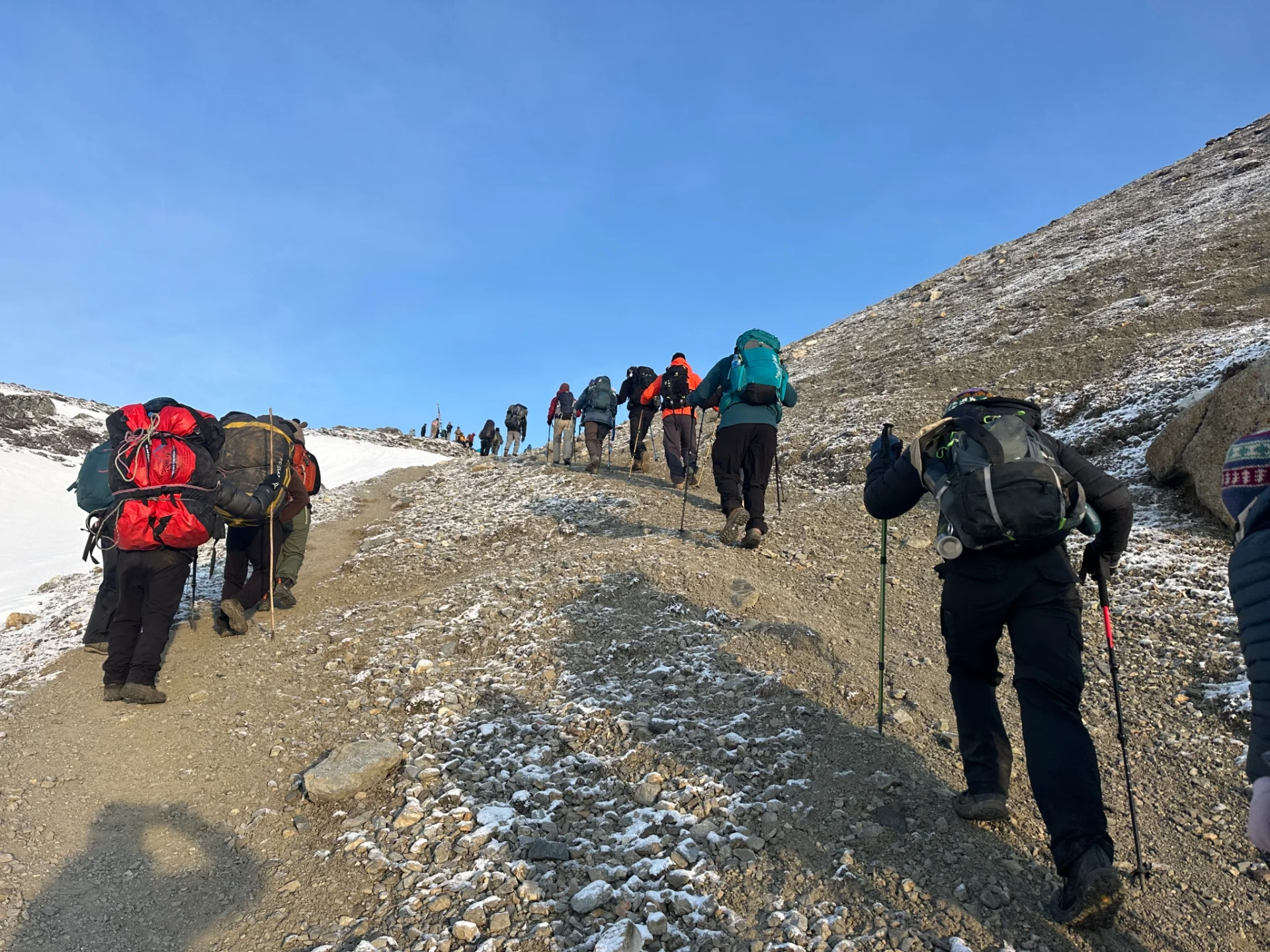
Everyone planning the Manaslu Circuit asks the same thing sooner or later: is it really that hard?
Well, understanding the Manaslu Circuit Trek difficulty is important before booking your trip. That’s because the trail rarely hurts you where you expect it to! The altitude looks scary on paper at 5,106 m, yet our guests usually point at something else when we ask what tested them most.
Some have blamed a waterfall (near Tatopani) that soaked them before lunch. Others remember a 4 AM start in the dark at Dharmashala, or the knee-grinding descent that follows the pass!
So, what actually makes this circuit challenging? Is it the distance, altitude, weather, remoteness, or a combination of everything?
In this guide, our team at Peaceful Nepal breaks down the grade, the hardest sections, and every factor behind the difficulty rating. We have run this trek for years and we will also show you how our guides turn the hard parts into the best stories of the trip!
What is Manaslu Circuit Trek Difficulty Grade?
In English trekking terms, the Manaslu Circuit is rated moderate to difficult. We call it a demanding trek for first-timers and a rewarding one for anyone with a few multi-day hikes behind them!
Larkya La (5,106 m) needs no ropes or technical climbing skills. Even so, snow, ice, and altitude can make the crossing a serious day!
Numbers explain the rating better than labels. The total distance depends on your route, starting point, and side trips such as Manaslu Base Camp, Birendra Lake, Serang Gompa, or Tsum Valley. Published figures for the standard circuit range from about 130 to 180 km.
Other famous routes put this in perspective! Manaslu tops out lower than Thorong La (5,416 m) on the Annapurna Circuit Trek and Kala Patthar (5,644 m) near Everest Base Camp. However, it feels just as tough overall. Lodges are basic, medical help is thin, and villages sit far apart.
Your route choice also shifts the grade! The Manaslu Circuit Trek with Serang Gompa adds a side trip from Gap and an extra day to the itinerary.
And the Manaslu with Tsum Valley Trek stretches the plan to 20 days in our itinerary. It adds distance, but it also builds fitness before the pass!
The Hardest Sections of the Manaslu Circuit Trek
Most trekkers brace for Larkya La and forget everything else! In truth, the circuit hides several tests long before the pass. Our team has walked it in different seasons, and these three stretches come up in almost every guest debrief!
The Jeep Ride and the Waterfalls Before Jagat
The difficulty starts before your first step! Buses usually stop at Soti Khola during monsoon and early autumn. From there, shared jeeps crawl along narrow, slippery roads toward Machha Khola and Tatopani. Plenty of guests grip the seat the whole way!
Then, the trail surprises you! Between Tatopani and Jagat, several waterfalls cross the path, and in early autumn, you walk through them rather than around them.
The spray hits with real force. So, kindly keep your rain gear on top of your bag, because a soaked start under gloomy skies can leave you cold for hours. Well, our guides usually joke their way through the first waterfall, so guests laugh instead of shiver.
Landslide Zones and Long Climbs Before Samagaun
Several lower sections break apart after rain! Pewa to Deng sees frequent slides, and our team once met an active one there.
Bur to Gap brings erosion along steep slopes, and the Deng to Bihi Phedi stretch mixes a stream crossing with loose rock. Cross these sections carefully and avoid stopping beneath unstable slopes.
Next comes the climb from Gap toward Namrung, which many guests rate as the biggest uphill before the high villages. The forest stays muddy because sunlight barely reaches the ground!
Later, rest-day hikes to Pungen Gumba, Birendra Lake and Manaslu Base Camp test your legs again.
Trail conditions around Birendra Lake can change with the season and water levels. So, please follow the route your guide recommends and do not attempt water crossings on your own.
Dharmashala to Larkya La and the Long Way Down
This is the day everyone remembers! You sleep at Dharmashala (4,470 m) and wake at 3 or 4 AM for a 7 km climb to the pass.
No teahouse stands along the way, so snacks and warm water matter! Even in autumn, the ice beyond Dharmashala can be slippery, so crampons or microspikes may be needed depending on conditions.
Then, the real punishment begins! A steep 4 km descent leads to High Camp (4,400 m), followed by another 4.5 km to Bhimthang (3,700 m). That means about 11 km (7 km up and 4 km down) before you reach High Camp for a proper meal, and the full day runs roughly 15 to 16 km.
The glacier downhill section after Larke Pass strains knees, and we have even seen some trekkers get injured here. So, poles and gaiters make a huge difference. Plus, make sure you don’t go too fast: slow is the key here!
In fact, many guests have told us that this was the day they struggled! Even so, our guides keep the mood light with jokes and tea-stop stories. So, with Peaceful Nepal, many guests shall barely notice the kilometres vanish, we promise!
4 Factors That Affect Manaslu Circuit Trek Difficulty
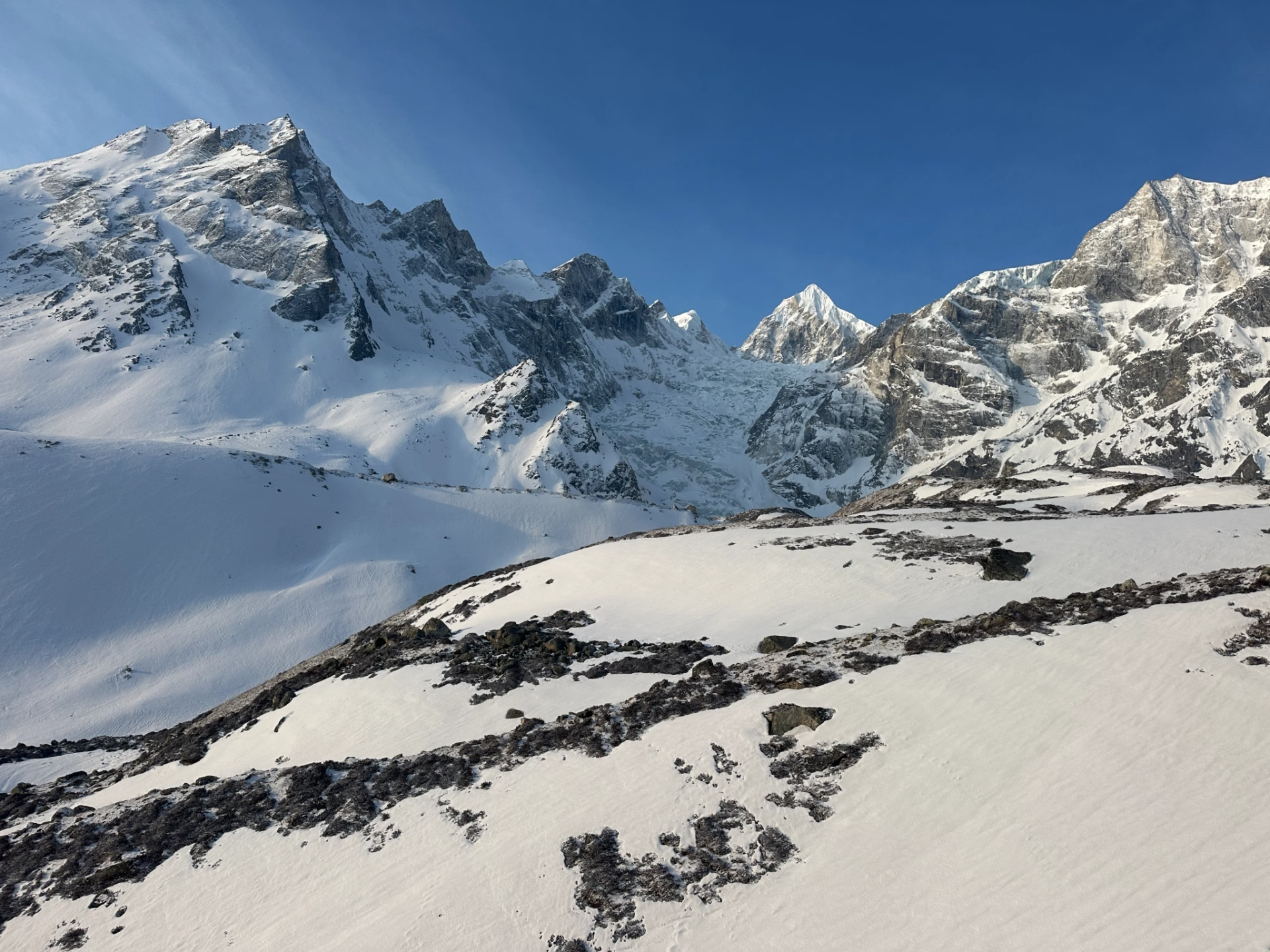
Beyond the hard sections, four factors shape how difficult the trek feels. Understanding them early helps you pick the right season, itinerary and pace!
Length and Daily Distance
A typical itinerary runs 14 to 15 days from Jagat (1,370 m) to Tilche (1,560 m). Daily walks last 6 to 8 hours, and fatigue builds quietly!
Around day 4 or 5, many trekkers feel the first wave of doubt. The scenery keeps improving, yet the legs start to complain.
Because of this, we plan an average of 13 to 15 km per day. We also ask guests to hold 12 to 13 km even when they feel strong.
Remember that you need to save that extra energy for the longer days! And as mentioned earlier, adding Tsum Valley stretches the distance further, so plan more rest if you choose it.
Altitude Sickness Risk
Without a doubt, altitude deserves the most respect of all! You climb from around 870 m at Machha Khola to 5,106 m, and the effects usually begin above Namrung (2,630 m).
Our guides suggest limiting your sleeping elevation gain to about 500 m per day above 3,000 m. They also recommend a rest day every 3 to 4 days. So, you see, rushed itineraries break both rules!
As a result, headaches, poor sleep and nausea appear. Untreated acute mountain sickness can progress to HACE or HAPE, and both can be fatal!
Altitude sickness is one of the most important risks to consider. Local news has reported trekker deaths near Larkya La in recent years. And for this reason, we build acclimatization days into every plan.
Weather and Snow at Larkya La
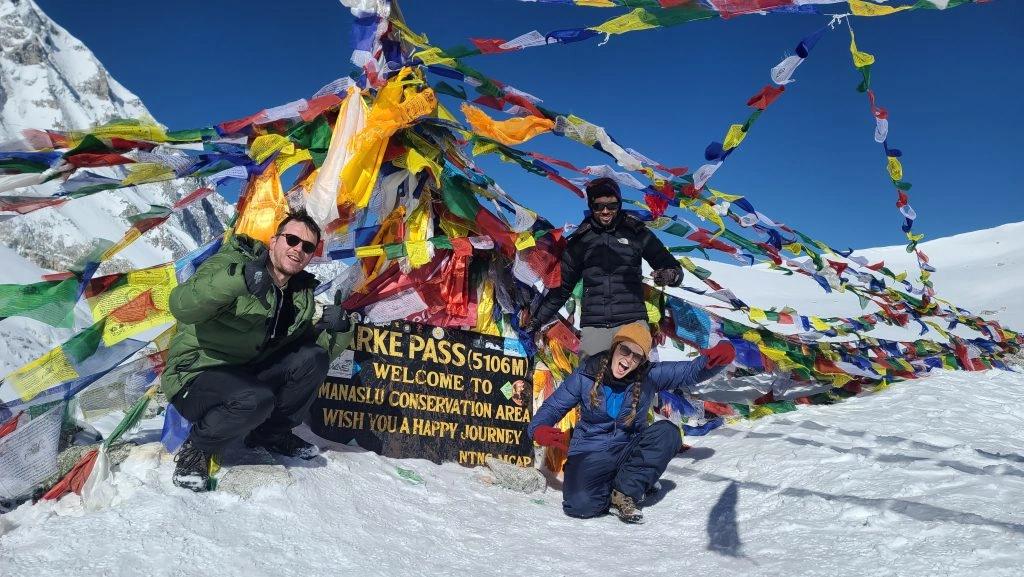
Temperatures near Larkya La can fall well below freezing, especially at night and in the early morning, and snow is possible in any season.
Recently, shifting patterns have brought heavy rain into late September and snowfall in October, which once felt unusual. Afternoon winds also build around Pungen Gumba, Birendra Lake and the pass itself.
In peak winter, deep snow can close Larkya La completely! The Manaslu Base Camp side trip also becomes risky then. Therefore, we keep buffer days in the plan and start every high-altitude walk early morning.
Remoteness, Terrain, Seasonal Crowds, and Recent Flood
Beyond the roadhead, the upper trekking route is largely accessed by mountain trails. Basic health posts are found in some larger villages such as Philim, Prok, Namrung, Lhi, Lho and Samagaun, but medical services remain limited.
In serious emergencies, helicopter evacuation may be necessary. Travel insurance covering high-altitude trekking and evacuation is strongly recommended for this trek. We may ask for your insurance details when arranging permits!
Terrain adds more pressure! Landslide-prone sections dominate the lower trail, avalanche risk grows higher up, and ice waits beyond Dharmashala.
Moreover, the circuit is busier than it used to be! It’s no longer the off-the-beaten-path trek that we agencies used to promote. Lodges fill quickly in spring and autumn, and you might even have to share a tent at Dharmashala; otherwise, you need to stay in shared dormitory-style rooms!
So, early booking is a kind of necessity for 2027 and beyond! And remember that the Budhi Gandaki flood of October 2026 affected parts of the lower trail, so please ask your guide about current conditions!
Manaslu Circuit Trek Difficulty by Season, Fitness and Facilities
Season changes how hard the Manaslu Circuit feels more than most trekkers expect!
Spring (late March to May) and autumn (mid October to early December) are known to bring the clearest views and the most stable trails. However, both seasons also bring the biggest crowds.
On the other hand. monsoon adds muddy forests and frequent landslides below Gap. Likewise, winter brings deep cold, and heavy snow can close Larkya La entirely!
Also, note that fitness matters just as much. You should handle 7 to 8 hours of walking on consecutive days, ideally with a loaded daypack! Therefore, start training 8 to 12 weeks ahead with uphill walks, squats and lunges, plus one long hike each week.
Don’t miss out on talking to your doctor too, especially if you have heart, lung or blood sugar concerns. Medical help on the trail is limited, so if your doctor advises against the trek, please respect that advice!
The most underrated factor is that comfort levels also affect difficulty. Lodges offer twin-sharing rooms, squat toilets and hot showers up to Samagaun (usually for an extra fee). Electricity and paid charging reach Samdo, but Dharmashala stays basic, so carrying a power bank is non-negotiable!
Furthermore, mobile coverage works mostly with an NTC SIM and that too disappears near the pass. Wi-Fi is available in many lodges up to Samdo, but for an extra fee. Carry Nepali rupees, since you will pay for items not covered by the package, such as drinks, snacks, charging, and Wi-Fi, in cash.
These facilities may be unfamiliar to many trekkers, so it is important to prepare for basic mountain conditions.
Finally, be sure to protect yourself with travel insurance that covers trekking above 5,000 m and helicopter evacuation. As mentioned earlier, it is strongly recommended for this trek!
Our Peaceful Nepal package arranges the permits your route needs. We also recommend adding one or two buffer days to your itinerary so weather delays never force you to rush the pass
How to Make the Manaslu Circuit Trek Easier? Tips From Our Guides!
Difficulty shrinks fast when you prepare for the right things. And here are some habits that have helped our guests the most in past years that we still suggest:
Never skip the Samagaun acclimatization day: This single rest day helps your body adjust before the higher sections.
Hike during rest days: Pungen Gumba, Birendra Lake, Manaslu Base Camp and the hills around Samdo all follow the climb high, sleep low rule. Start in the morning, before the wind rises!
Go slow: If you feel you cannot keep up, say so. That’s because slow trekkers finish more often than fast ones.
Stay regularly hydrated: Drink fluids steadily through the day, based on your own needs. Warm water, ginger tea, and garlic soup can all help!
Tell your guide early: A mild headache or nausea is worth a quick mention, and our friendly guides will take care of the rest!
Finally, bring gaiters and trekking poles, and ask your guide whether crampons or microspikes are needed for the conditions on your dates
One thing that many agencies overlook (that we don’t at Peaceful Nepal) is treating your porter as a second guide. Well, porters know every rock, every weather mood, and the best tea stop on each section!
In fact, our own Managing Director began his own career as a porter. That is why respect for porters runs through our company, and why many people along the Manaslu Circuit Trek, our hero package, know him well!
Can Beginners Do the Manaslu Circuit Trek?
Yes, beginners can complete this trek! It is not technical, so the only things you need are stamina and patience rather than climbing skills.
What you do need is realistic training, a slow itinerary, and a team like the one from Peaceful Nepal that stays beside you!
That is exactly why guests choose our Manaslu region packages! A licensed guide is required for the Manaslu restricted area, and ours keep you company, motivate you on the 4 AM climb, and handle the daily logistics.
Moreover, we arrange all the complex permits your trek needs as part of the package. Read our guest reviews to learn more about their experiences!
The Final Answer: Is Manaslu Worth the Difficulty?
Absolutely! You first see Manaslu (8,163 m), the eighth-highest mountain on Earth, properly from Lho. After that, the Mansiri Himal range keeps getting closer, and a glacial lake waits beneath the peak at Birendra Lake, near Samagaun.
Then comes Larkya La, where prayer flags snap in the wind and every sore muscle suddenly makes sense!
Honestly speaking, the difficulty is real, but it is also manageable. With proper preparation and an experienced guide, the challenging sections can become a rewarding adventure.
Frequently Asked Questions
1. How difficult is the Manaslu Circuit Trek?
The Manaslu Circuit Trek is moderate to difficult due to high altitude, long walking days, steep climbs, and the Larkya La Pass crossing (5,106 m).
2. Can beginners do the Manaslu Circuit Trek?
Yes, beginners can complete the trek with good fitness, proper training, acclimatization, and a gradual itinerary.
3. What is the hardest part of the Manaslu Circuit Trek?
Crossing Larkya La Pass (5,106 m) is the hardest part due to altitude, cold temperatures, steep climbs, and the long descent.
4. How many hours do you walk each day on the Manaslu Circuit Trek?
You typically walk 6–8 hours daily, depending on the route, altitude, and trail conditions.
5. How should I prepare for the Manaslu Circuit Trek?
Start training 8–12 weeks before departure with uphill hiking, stair climbing, cardio exercises, and leg-strength training.