

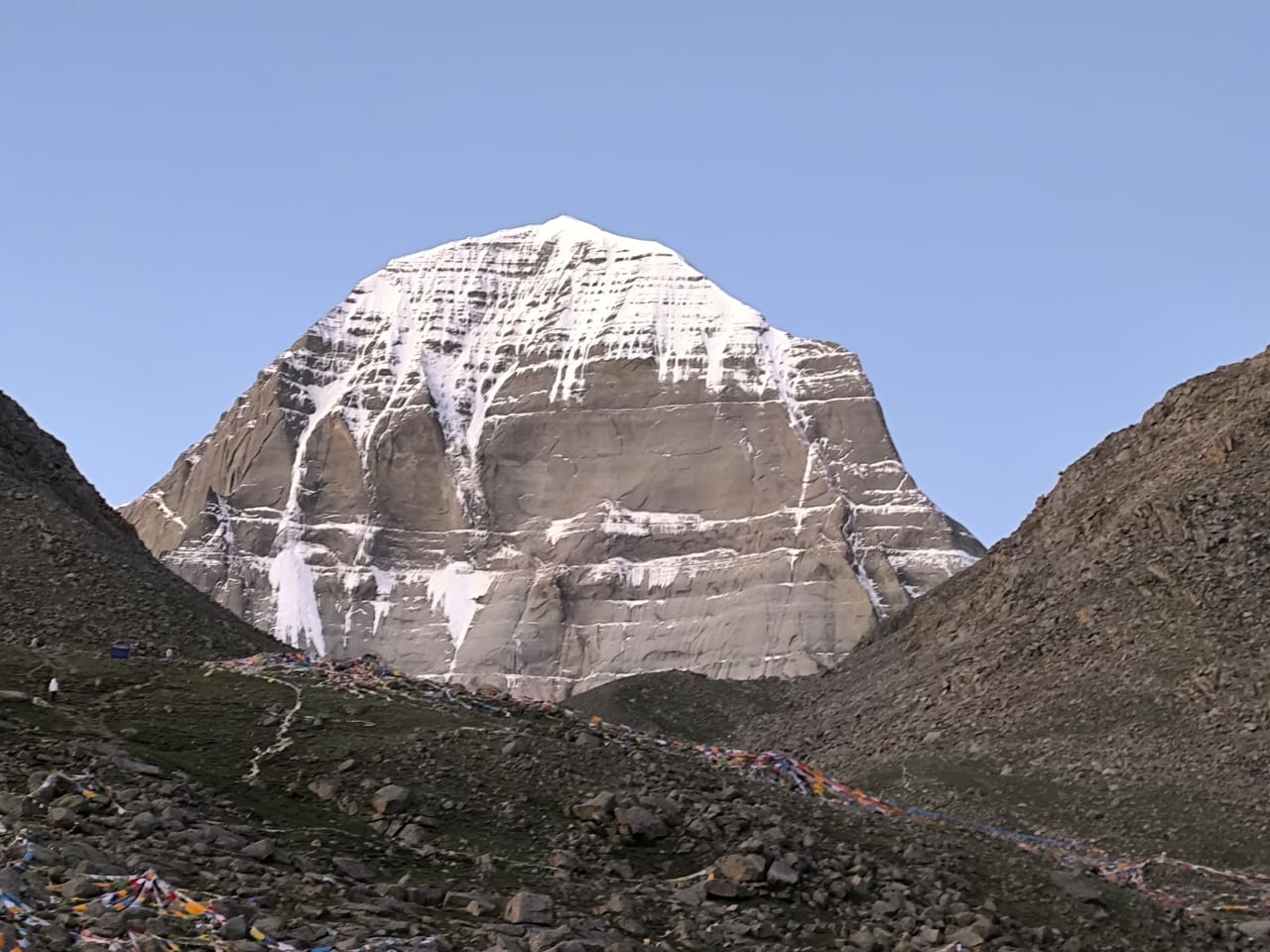
Choosing the right time for visiting Kailash Mansarovar, located in the high-altitude Ngari Prefecture of Western Tibet, is very important. The best months for the Lake Mansarovar and Mount Kailash trip are from May to September. During this time, performing the 52 km Kailash Kora(circumambulation) and crossing the challenging Dolma La Pass( 5,630 meters) becomes passable.
Tibet is often called the “roof of the world” and has a vast high-altitude plateau with a dry and rugged landscape. Due to the rainshadow area here, the rainfall is very minimal. This place is like a semi-desert. Each season experiences different weather and temperature conditions.
Whether you are planning to visit Tibet for Kailash Darshan, for Kailash outer kora, a spiritual journey, or just enjoying the Tibetan Himalayan landscape, choosing the right season enhances the journey.
In this blog, we have covered what to expect in each season so that you can choose the travel date for your Kailash Mansarovar Tour Yatra. You will also learn updated travel protocols and essential safety guidelines.
Month-by-Month Weather Breakdown
Tibet weather shifts from month to month, so below we have a breakdown of each season.
May to June: The Ideal Trekking Window & Spiritual Peak
- Daytime Temperature: 5°C to 15°C (41°F to 59°F)
- Nighttime Temperature: -5°C to 0°C (23°F to 32°F)
- The Verdict: Exceptional visibility, crisp air, and highly stable trekking conditions.
Starting from mid of May, the pilgrimage journey to Lake Mansarovar and Mount Kailash begins. The snow slowly starts to accumulate, making the high altitude accessible for travel. The weather begins to clear, and uninterrupted, sharp views of Mount Kailash can be seen. In June, the ice melts fully, making it easier for travellers to perform the Kailash Kora.
The Saga Dawa Factor: The greatest festival of Tibet, the Kailash Saga Dawa festival, falls in May and June. Tibetans gather at the Tarboche flagpole in Darchen to celebrate the birth, enlightenment, and parinirvana of Lord Buddha. A huge crowd with spiritual and cultural views, prayer ceremonies and rituals makes Tibet spiritually vibrant and full of energy.
Note: If you want to visit Tibet during peak travelling and festival months of May and June, make sure to book the hotels at least a month in advance.
July to August: The Monsoon & The Rain-Shadow Dynamic
- Daytime Temperature: 10°C to 18°C (50°F to 64°F)
- Nighttime Temperature: 0°C to 5°C (32°F to 41°F)
- The Verdict: Warmest ambient temperatures, highly active spiritual energy, but complex transit logistics.
In most parts of the world, the summer brings heavy rainfall, but in Tibet, summer is actually the popular time for travelling. Mount Kailash is located in the rain-shadow zone, so rainfall is very minimal. The longer days, pleasant daytime sightseeing and the Kailash kora trek become more comfortable. However, sometimes due to brief showers, you can expect cloudy skies near Lake Mansarovar and around Mount Kailash.
The main challenge during July and August is to get there. If you choose the popular overland route via the Kerung border, you will encounter the full Nepalese monsoon. The chances of flood, landslide, flight delays and muddy road makes it difficult to cross the Tibet border.
On June 24, 2025, the Miteri Bridge was swept away by the devastating flood and immigration was temporarily halted. Travellers need to be very careful while travelling to Tibet in the monsoon season, even though travelling inside Tibet remains safe.
September to October: The Golden Autumn
- Daytime Temperature: 5°C to 12°C (41°F to 53°F)
- Nighttime Temperature: -10°C to -2°C (14°F to 28°F)
- The Verdict: Bone-dry trails, minimal crowds, but rapidly plunging nighttime temperatures.
Elite high-altitude trekkers and Tibetan guides highly recommend traveling to Tibet for the Kailash Mansarovar tour during September. During this month, clear blue sky offers the perfect view of Mount Kailash’s face. You can capture the beautiful photography of Mansarovar Lake and Mount Kailash. Also, the panoramic view of the surrounding Transhimalaya and western Tibetan mountains from Dolma la Pass makes it worth visiting. The peaceful Kora trail, the beautiful landscape of Tibet, and September are actually the right time to do a Kailash tour. By mid-October, the cold weather conditions start, and the Kailash trekking season begins to end.
November to April: The Forbidden Winter
- Daytime Temperature: Well below freezing
- Nighttime Temperature: -20°C to -30°C (-4°F to -22°F)
- The Verdict: Strictly closed.
Tibet sees really harsh weather in the winter season. The relentless snowfall at high-altitude regions makes the Dolma La pass impassable. The freezing temperature is unbearable even at nighttime, as the teahouse has very basic facilities. Due to safety reasons, November to April is the off-season for the Kailash Mansarovar Yatra.
Comparing the Seasons at a Glance
| Travel Attribute | Spring (May – June) | Summer (July – August) | Autumn (September – Mid Oct) | Winter (Nov – April) |
| Trail Conditions | Mostly dry, lingering snow | Muddy in transit zones | Perfectly dry, very firm | Deep snow blocks trails |
| Mountain Visibility | Extremely high / Crisp | Moderate / Occasional mist | Pristine / Highest clarity | Clear but inaccessible |
| Crowd Density | Moderate to High | Peak Pilgrimage rush | Low / Peaceful | Zero (Closed) |
| Best For… | Photographers & Festival seekers | Cultural immersion & Warmth | Trekkers seeking solitude | None |
Note: Always check the Tibet weather forecast before and during the tour for safe travel.
Route Logistics: How to Get There
Travelling to Tibet for the Mount Kailash tour for independent trekkers is strictly prohibited as per Chinese law. Therefore, all the travellers must hire a guide and travel in a group organized by the licensed tour operator. Once you fix the Kailash tour itinerary with the tour operator, you need to follow the official travel rules. There are three main options to reach this holy mountain in Tibet:
1. The Nepal Gateway (Domestic Flight + Helicopter)
The Kailash Mansarovar Yatra via the Simikot–Hilsa route in western Nepal crosses into Burang (Purang) County in the Tibet Autonomous Region of China. If you choose this route, you can complete the Kailash tour in just 10-11 days. The itinerary includes acclimatization in Kerung (2,700m) and Saga (4,600m) before heading toward Lake Mansarovar and Mount Kailash.
On this route, the Helicopter charter will take you to the Hilsa, and you will cross Tibet. Heli flight offers some of the best views of the isolated Nepal-Tibet border landscape. This route is best for small groups as the helicopter flight is limited and the teahouses at the border are also limited.
- Kailash Mansarovar Yatra via Simikot Hisa route cost: Approximately USD 3,000 – 4,500 per person.
2. The Lhasa Gateway (Direct flight to Lhasa)
Another approach to enter Tibet is by taking a scenic flight to Lhasa Airport from Tribhuvan International Airport. The flight will be around 1 hour and 20 minutes. From the flight, you can witness breathtaking panoramic aerial views of the Himalayas, including Mount Everest (8,848m), Cho Oyu (8,188m), and Lhotse (8,516m). You will spend an acclimatization day in Lhasa and explore the famous Potala Palace. Also, driving through the Tibetan plateau via Shigatse and Saga is really fun before heading toward Mount Kailash.
- Kailash Mansarovar Yatra via Lhasa route cost: Approximately USD 3,000 – 4,000 per person.
3. The Timmure/Keryong Gateway( Famous Overland route)
The most popular route used by international travellers to enter Tibet from Nepal is by taking the Timmure/Keryong route. You can take a bus or private jeep and then ride for 6-8 hours exploring the Nepalese landscape before reaching the border. This route is budget-friendly, and if you choose this route, it takes around 14-16 days to complete the Kailash Yatra. You will spend an acclimatisation day in Kerung and then drive to Darchen via Lake Mansarovar for Kailash Kora.
- Kailash Mansarovar Yatra via Lhasa route cost: Approximately USD 3,000 – 4,000 per person.
Special note: Kailash Inner Kora is not allowed for international rules as of now(2026) due to local rules and Chinese regulation and it is extremely challenging.
Crucial Altitude & Physical Preparation Safety
The Kailash Kora is not just like a mountain walk- the extremely high altitude trek crossing through Dolma La Pass at 5,630 meters (18,471 feet) is tough. Even though trekkers can hire horses for Kora from Darchen, you still need to walk while descending from the mountain pass. The main challenge that trekkers need to face is the altitude effect due to the low level of oxygen in the air. At high altitude, walking for 6-7 hours during the Kora is physically exhausting. So to make your journey safe, follow these helpful tips:
High-Altitude Safety Guidelines
- Pre-Trip Cardiovascular Conditioning: Before making the Kailash tour registration with the tour agency, prepare physically for at least 3 months. Focus on leg strength and building endurance by participating in activities like hiking, stair climbing, running, and joining a gym.
- Gradual Altitude Ascent: We should not walk too fast in the mountains. If you walk too fast, then the risk of catching altitude sickness increases. So walk slowly and steadily at your own pace. Follow climb high and sleep low once you reach 3,000 metres, and take proper rest during the acclimatization day.
- Aggressive Hydration: Keeping your body hydrated helps to keep you away from altitude sickness. Therefore, drink between 3 and 4 liters of water daily during the trip. Keep a water bottle with you all the time. The most important thing is to avoid alcohol, caffeine, and smoking strictly.
- Pharmacological Preparation: To deal with altitude, using Acetazolamide (Diamox) is very helpful. So consult with your doctor for the dose and follow the doctor’s advice.
- Tracking oxygen level: Use a pulse oximeter to track your resting heart rate and oxygen saturation levels twice a day in high-altitude environments. If it’s too low, descend to a lower altitude.
For detailed information about the difficulty of the Kailash Mansarovar Yatra, please check out this blog.
Vital Documentation Check
Travelling to Tibet to cross the border through immigration requires paperwork. The officials at the border will check your visa, permit and documents. So you need to carry all the documents with you before leaving for the Tibet Autonomous Region (TAR).
You will need:
- Valid International Passport: Your passport should be valid( 6 months of remaining validity) in good condition with blank pages.
- Chinese Group Visa: All the travellers who want to enter Tibet from Nepal should get the Chinese group visa. Your tour agency handles this.
- Tibet Travel Permit (TTP): Along with the Visa, travellers need to obtain the TTP as the Tibet Tourism Bureau issues it. You cannot enter Tibet without a TTP, even if you have a Chinese Visa. Your tour agency also handles this permit.
- Official Medical Fitness Clearance: At the border, the officials don’t demand the medical fitness certificate, but you should be free from underlying health issues, such as respiratory illness, heart problems, or high blood pressure.
- Travel Insurance: Emergency evacuation without the insurance is really costly in Tibet, so make sure to get insurance that covers all trekking risks and high-altitude emergencies.
Want to look at the Kailash itinerary via the Kathmandu route?
| Day | Route / Activity | Elevation (Meters) | Key Phase |
| Day 1 | Arrival in Kathmandu | 1,400m | Arrival & Briefing |
| Day 2 | Kathmandu sightseeing & Group Visa finalization | 1,400m | Cultural Tour & Documentation |
| Day 3 | Drive Kathmandu to Syabrubesi | 1,550m | Nepal Transit |
| Day 4 | Border crossing Rasuwagadhi Kerung | 2,700m | Tibet Entry |
| Day 5 | Acclimatization day in Kerung | 2,700m | Rest & Elevation Prep |
| Day 6 | Drive Kerung to Saga | 4,600m | Plateau Ascent |
| Day 7 | Saga to Lake Mansarovar | 4,590m | Arrival at Sacred Lake |
| Day 8 | Mansarovar Puja & Drive to Darchen | 4,670m | Spiritual Staging Point |
| Day 9 | Kora Day 1: Darchen to Dirapuk | 4,900m | Trekking Commences (North Face) |
| Day 10 | Kora Day 2: Dirapuk to Zuthulpuk via Dolma La Pass | 5,630m | Summit Pass Crossing |
| Day 11 | Kora Day 3: Zuthulpuk to Darchen and Drive to Saga | 4,600m | Kora Completion & Return |
| Day 12 | Saga to Gyirong (return journey) | 2,700m | Descent from Plateau |
| Day 13 | Border crossing & Drive back to Kathmandu | 1,400m | Return to Nepal |
| Day 14 | Final departure from Nepal | — | Journey Ends |
Frequently Asked Questions(FAQs)
1. When is the absolute best time to visit Kailash Mansarovar?
The best time to visit Kailash Mansarovar is between the months from mid-May and September. During this time, entry to Tibet becomes easier, and the weather remains mostly stable with a perfect view of Mount Kailash and the surrounding area. Also, crossing the challenging Dolma la Pass becomes much easier compared to other months.
2. Can I do the Kailash tour during the winter months (November to April)?
No, winter travel is strictly not recommended, and it is off-season for the Kailash tour. During this time temperature around Kailash drops below -20°C to -30°C (-4°F to -22°F). Also, strong winds and trail cover with heavy snowfall at high altitude make it impossible to perform Kailash Kora.
3. How does the summer monsoon (July & August) affect the journey?
Lake Mansarovar and Mount Kailash lie in the rainshadow area behind the Himalayan range. So, due to minimal rainfall, performing Kora is best during this time. However, crossing the Tibet border is affected by the monsoon due to potential flight delays, muddy mountain roads, and landslide disruptions.
4. How drastically do daytime and nighttime temperatures vary in Ngari Prefecture?
During the daytime, temperatures range from 12°C to 18°C (53°F to 64°F), but at night, it drops to 0°C (32°F). Daytime temperature is moderate while night remains chilly most of the time.
5. How much does it cost for the Kailash Yatra?
The Kailash Mansarovar budget package starts from USD 2400 per person. However, if you choose the luxury Yatra, it might cost you over USD 5,000. The overall cost also depends on several factors like route, itinerary, service level and personal expense.
6. Are there risks of altitude sickness on this tour?
Yes. altitude gain on the highest point of the trek, Dolma La Pass( 5,630 meters), cold, low level of oxygen presence in high altitude, and physical exhaustion can increase the risk of AMS. However with choosing a proper itinerary with a proper acclimatisation day and following altitude sickness preventive measure we can reduce the effect of altitude during the tour.
Final Thought
Every year, around 30,000 – 40,000 pilgrims and tourists visit the Kailash Mansarovar. It is believed that travelling here brings spiritual transformation and moksha when performing kora and taking a holy bath in Mansarovar Lake. It is a must-visit destination to enjoy the beauty of Tibet and to explore the home of lord Shiva.
If you are planning to visit the Kailash Mansarovar in 2026.2027, Peaceful Nepal will organize a well-planned and guided pilgrimage tour.
Contact Us for More Details
- Email: peacefulnepaltreks@gmail.com
- WhatsApp/Phone: +977 9851150739
- Quick Response: Contact us for itinerary details, pricing, permits, and booking assistance.
“Om Namo Shivaya”
Posted on