

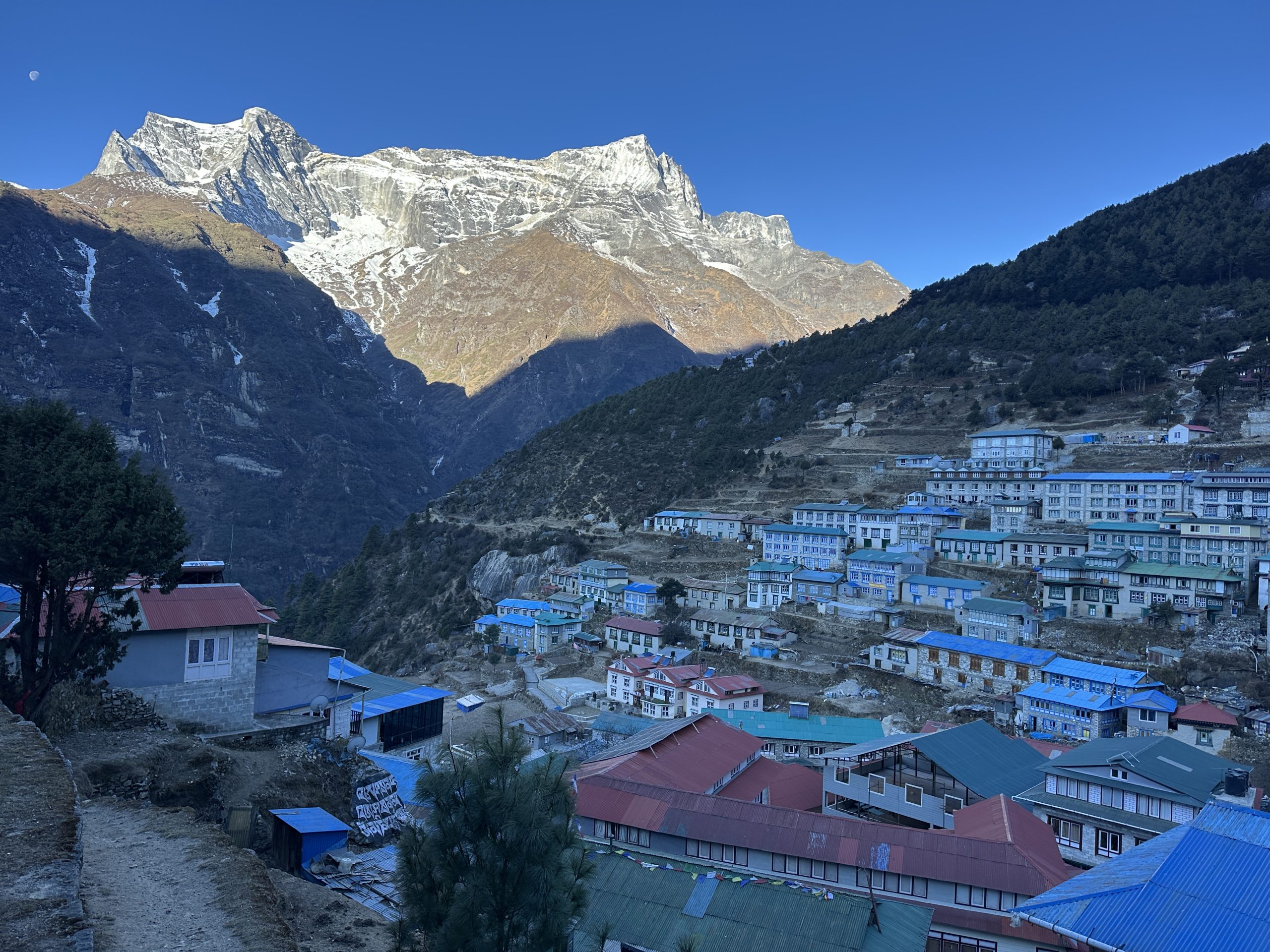
The adventure of the Himalayas, the culture, and its beauty meet in one place, Namche Bazaar. This is a small town located at the foot of the mountains that resemble the moon, but with a more vibrant color palette. The city has brightly painted homes in the mountain slopes, stone pathways, prayer flags, Buddhist monasteries, modern cafes, and huge mountains around. It is also regarded as a unique destination for travellers to experience nature, culture, and modernity.
Namche Bazaar is referred to as a vibrant Sherpa village located in the Khumbu region of Nepal that serves as a gateway to Mount Everest. This town is situated in the UNESCO World Heritage Site – Sagarmatha National Park, which was created in 1976 to preserve the remarkable ecology and culture of Khumbu at an altitude of 3,440 meters (11,286 feet) in Solukhumbu District. Though the number of tourists here does not diminish throughout the year, it draws most tourists during autumn and spring when it provides the best view of amazing mountains such as Mount Everest and Mount Amadablam.
Some of the known stores include trekking equipment shops, bakers, coffee houses, drugstores and handicrafts made by local artists, which makes it ideal for tourists who are about to start their journey. More than being a place where people stop to rest on their way to other places, Namche Bazaar has been visited because it offers a lot to tourists. They can have an experience with the Himalayas through the cultural experiences with the Sherpas, the market and the scenery.
The altitude of the place allows acclimatization; hence, people who want to visit the Everest base camp should take a couple of days for acclimatization. This is a precaution that avoids altitude sickness by allowing the body to adapt to high altitudes and low oxygen levels. Tourists usually spend a couple of days while hiking during the day but resting at night in Namche.
There has been an observable change in the trading of retail products including foodstuffs and trekking items from the Tibetan artifacts. Freshly cut vegetables, yak cheese, butter, dried meat, woolen goods and household goods are some of the highly demanded items in this place, using yaks and donkeys/ mules as the only means of transportation. ATM kiosks, chemists, hot water showers, internet services and battery chargers for mobile phones and camera are located throughout the town, regardless of the isolated location of this town in the Himalayas. These amenities offer comfort to travellers as they prepare themselves to proceed further without any problems with regard to the basic facilities.
During our visit to Namche, we learn about the Sherpas, an indigenous people of their own with their unique culture, traditions, language, religion, art and history of mountain climbing on Mount Everest, which is transmitted from one generation to another among them.
If you are lucky, in the morning hours, between Lhotse and Nuptse, there would be a magnificent view of Everest. There are several stupas and religious sites such as the Pemba Doma memorial stupa and Namche Monastery.
History of Namche Bazaar
The history of Namche Bazaar dates back to the 17th century, when it was established as a small village of traders and yak herders. In the 18th century, the Sherpas migrated to the Khumbu region and gradually made Namche Bazaar their home, shaping unique culture and traditions. Before Namche Bazaar became a popular trekking destination, it was an important trading center between Nepal and Tibet. Traders carried salt, wool and yak products from Tibet, while rice, tea, sugar, and other goods were brought from Nepal. A regular market for exchanging goods became a weekly market; this tradition has continued to this day.
Major Attractions
- Sagarmatha National Park Visitor Centre: To view the unique Himalayan flora and fauna, high biodiversity, and the heritage, culture and tradition of Khumbu Sherpa.
- Visit the Sherpa Culture Museum: It is one of the places where you will get to know the history of the place through the Sherpa Culture Museum located in Chhokrung along the Everest Base Camp trekking route. In addition, there is also the chance to learn about the traditions and unique lifestyle of the Sherpa community through the museum. At this museum, you will find a vast collection of cultural objects, traditional artifacts, pictures and newspaper cuttings that tell stories of the achievements made by Sherpa mountaineers who conquered the Mount Everest. The Sherpa Culture Museum is run by Lhakpa Sonam, a local photographer and also displays early photographs of Mount Everest expeditions and international mountaineers.
- Hotel Everest view (3880 m): It is another viewpoint from which one can get to see beautiful sights of Mt. Everest, Ama Dablam, Lhotse and Himalayas.
- Visit the Villages of Khumjung and Khunde: Go to the Sherpa villages of Khumjung and Khunde to know more about their culture. Visit the historic Khumjung Monastery and see the famous Yeti scalp preserved within the monastery.
- Wander Around the Saturday Market: Check out the bustling market place where the local traders meet to sell their fresh vegetables, handicrafts, clothes, trekking supplies. etc.
- Enjoy Local Cafes and Bakeries: Relax at the local cafes/bakeries that offer nice atmosphere and delicious tea/coffee to you in Namche Bazaar.
Best Time to Visit Namche Bazaar
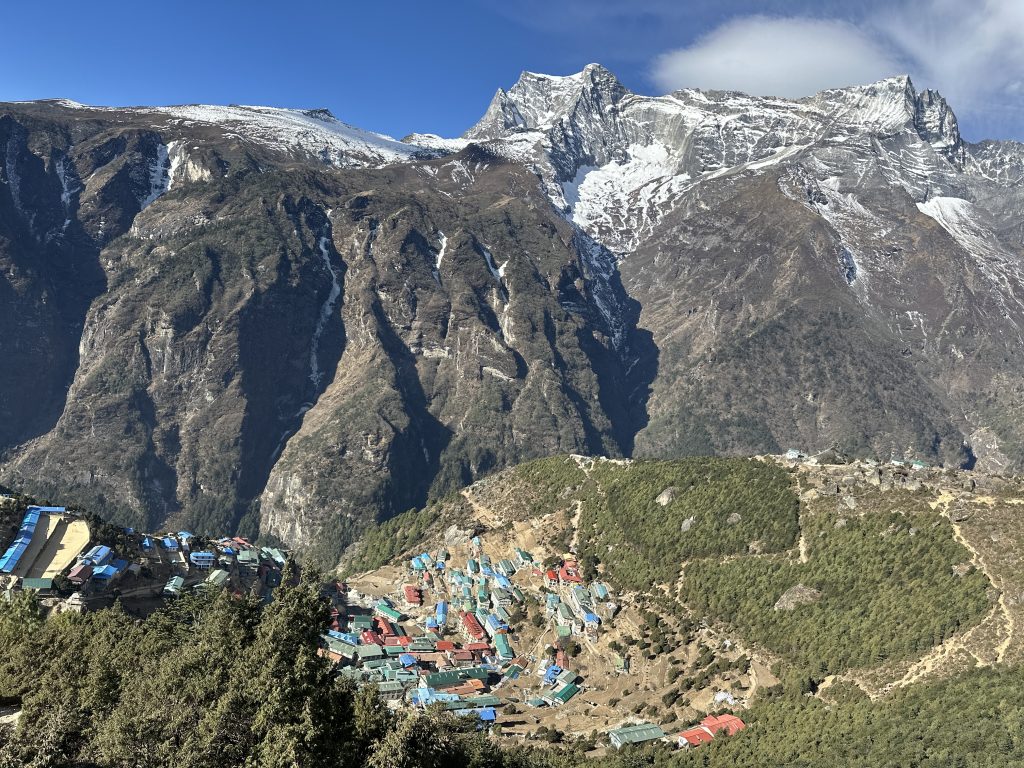
Namche Bazaar seldom experiences summer, i.e., cool summers and the coldest winters. Spring (March to May) and autumn (September to November) are considered the best seasons to visit Namche Bazaar. Spring is famous for blooming rhododendrons, while autumn offers clear skies and excellent views of the Himalayan peaks. Due to drier trails and the extraordinary scenery, these seasons are popular for trekking and the influx of tourists.
| Season | Months | Highlights | Suitable for |
| Spring | March – May | Blooming rhododendrons, pleasant weather, clear mountain views | Best time to visit and trek |
| Autumn | September – November | Clear skies, stable weather, excellent Himalayan views | Best time to visit and trek |
| Monsoon | June – August | Heavy rainfall, slippery trails, cloudy weather | Less suitable for trekking |
| Winter | December – February | Cold temperatures, occasional snowfall, fewer tourists | Suitable for experienced trekkers who can handle cold weather |
Weather and Climate in Namche Bazaar
Namche Bazaar has cool temperatures throughout the year, with temperatures ranging from
-4°C to 10°C. Depending on the time of year, temperatures in Nāmche Bāzār range from chilly to very cold. January is the coldest month, while July is generally the warmest and wettest
month with heavy rainfall, whereas November is the driest month, offering clearer skies, sunny days, and pleasant weather.
The weather in Namche Bazaar changes with the seasons and can change quickly even within a single day. The seasons here are very distinct, and they can really impact your trekking experience. Because the high-altitude climate can change quickly, you might feel warm in the morning but cold in the afternoon or evening.
Popular Treks Passing Through Namche Bazaar
Almost every trek in the Everest region passes through Namche Bazaar, making it a popular destination for thousands of trekkers every year. So, Namche Bazaar is known as the gateway to Everest. Namche Bazaar is the main acclimatization stop during treks in the Everest region. Some of the most popular treks passing through Namche Bazaar include:
Options and time to reach Namche Bazaar
Option 1: By Aeroplane + Trek
Day 1: Kathmandu → Lukla → Phakding
This hike starts with the flight from Kathmandu (or Manthali in Ramechhap during the season) to Lukla (2,860 m). The trek then descends towards Phakding (2,610 m) by visiting small villages such as Chheplung and Thado Koshi. Trekking from Lukla requires you to walk along the Dudh Koshi River and cross several suspension bridges. The distance covered is approximately 8 km, and the trip takes about 3–4 hours.
Day 2: Phakding → Namche Bazaar
Then from Phakding (2,610 m), there would be an ascending route to Namche Bazaar (3,440 m). There will be a few local villages that trekkers can visit on this hiking journey including Toktok, Bengkar, Monjo (2,835 m), the latter two being the starting point for Sagarmatha National Park.. Hillary Suspension Bridge (3,250 m) comes after Jorsalle, one of the famous places of the trekking route. From here, the path becomes steep and climbs through hills
covered in forests with occasional sights of Everest and Ama Dablam on clear days. The total distance is about 12 km and takes around 6–8 hours, ending at Namche Bazaar.
Option 2: By Road + Trek to Namche Bazaar
Day 1: Kathmandu → Salleri → Puiya
From Kathmandu, take a Jeep ride to Salleri, a journey of about 10 to 11 hours. After Salleri, you start the journey by Jeep in rough terrain to Puiya (at about 2700 m), which takes about 8 hours, depending upon the weather.
Day 2: Puiya → Phakding (Trek Begins)
Mani walls, prayer flags, and chortens decorate the villages, showing the impact of Buddhism culture. The trail leads via Pakhepani, and after 2 to 3 hours you get to the village of Surke.
There are rivers, suspension bridges, forests, and beautiful mountain scenery in between. This is the same path followed by Sir Edmund Hillary and Tenzing Norgay for climbing the first Mount Everest.
The trail then leads through:
- Muse (2593 m)
- Chaurikharka (2619 m)
- Thado Koshi area
- Ghat village (2540 m)
The day ends at Phakding (2610 m), a quiet village located along the Dudh Koshi River.
Day 3: Phakding → Namche Bazaar
The trail starts from Phakding and follows the riverside trail, passing some villages such as Toktok (2760 m). After entering into the Sagarmatha National Park in Monjo, it passes through the historic Hillary suspension bridge (3250 m) from Jorsalle and then ascends a steep slope and ends in Namche Bazaar, where one can enjoy some breath-taking Himalayan views. The route consists of some lesser-traveled routes that have easier trails with easy transition from low hills to high mountains. However, it is longer and physically demanding.
Option 3: Helicopter to Reach Namche Bazaar
The easiest and the most convenient way of transporting oneself to the region of Everest is through helicopters. Helicopters take off from either Lukla or Kathmandu and land at Syangboche (next to Namche Bazaar). Syangboche is located near Namche Bazaar where one can walk from. Namche Bazaar is the trading and acclimatizing point for the whole of the Khumbu region. This is mainly used by people who do not have much time, emergencies, and luxury tourism seekers. Transporting through helicopters provides you with amazing view of the majestic Himalayas, which include Mount Everest, Ama Dablam, and many more close by peaks. The main drawback of this means of transport is that it is very expensive and is highly dependent on weather conditions. Namche Bazaar offers amazing scenery, culture, and mountain experience.
Food in Namche Bazaar
Namche Bazaar offers you both the traditional food of Sherpa and also international food. The traditional food of Sherpa includes potato, tsampa, butter tea, thukpa, momos, Sherpa stew, Yak meat and Yak cheese foods. Apart from the traditional food, Namche Bazaar offers a lot of cafes and restaurants providing all kinds of international foods including pizza, burgers, pasta, fried rice, sandwiches, pancakes, omelettes, and porridge.
Local Economy of Namche Bazaar
The economy of Namche Bazaar is mainly reliant on tourism. The majority of people there make their living from the tourists who come for trekking and offer different types of facilities to the tourists such as hotels, lodges, restaurants, cafeterias, and shops. Commerce and trade are another sector of economic activities for Namche Bazaar because it serves as one of the major centers for business in Khumbu. There are many stores where you can find everything necessary for the visitors, including clothing, equipment, and other stuff. Apart from tourism and trade, there are some agricultural activities in Namche Bazaar, as well as raising yaks for milk to produce yogurt.
FAQs
Where Is Namche Bazaar Located?
Namche Bazaar is a famous mountain town located in northeastern Nepal, in the Khumbu region of Solukhumbu District, within Sagarmatha National Park. It lies at an altitude of 3,440 meters above sea level. It is 137 km (85 miles) northeast of Kathmandu.
How to Reach Namche Bazaar?
There are three main ways to reach Namche Bazaar. The most popular route is to fly from Kathmandu (or Manthali during peak season) to Lukla and trek for two days via Phakding. Travellers can also reach Namche Bazaar by road from Kathmandu to Salleri or Puiya, followed by a 2–3-day trek, making it a good alternative when Lukla flights are unavailable. For those seeking the fastest option, a helicopter flight from Kathmandu or Lukla to Syangboche, followed by a short walk, provides quick access to Namche Bazaar. Each route offers stunning Himalayan views, Sherpa villages, and an unforgettable trekking experience.
What Are the Best Things to Do in Namche Bazaar?
Namche Bazaar is the perfect mix of adventure, Sherpa culture, and breathtaking Himalayan views. Visit the Sagarmatha National Park Visitor Centre to learn about the region’s unique Himalayan flora and fauna, rich biodiversity, and the heritage of the Khumbu Sherpa community. Explore the Sherpa Culture Museum to discover the history, traditions, and mountaineering legacy of the Sherpa people. Hike to the famous Hotel Everest View (3,880 m) for spectacular views of Mount Everest, Ama Dablam, Lhotse, and other Himalayan peaks. You can also wander through the lively Saturday Market, where local traders sell fresh vegetables, handicrafts, clothing, and trekking supplies, making it a great place to experience the local lifestyle.
Can We See Everest from Namche Bazaar?
Yes, we can see Mount Everest from several viewpoints near Namche Bazaar, especially on clear days. Although the mountain is partially hidden from the town itself, a short hike to the Everest View Hotel or nearby viewpoints offers clear views of Mount Everest, along with other Himalayan peaks.
What is the altitude and distance of Namche Bazaar?
Namche Bazaar is situated at 3,440 meters (11,286 feet) above sea level and approximately 137 km from Kathmandu and 13 km from Lukla.
Is Namche Bazaar Suitable for Beginners?
Namche Bazaar is suitable for first-time trekkers with a basic level of physical fitness. The trek involves several hours of walking each day, including steep uphill sections and significant elevation gain. As Namche Bazaar is located at an altitude of 3,440 meters (11,286 feet), trekkers should be prepared for high-altitude conditions and follow proper acclimatization practices. Regular walking or light hiking before the trip, staying hydrated, and maintaining a steady pace will help beginners enjoy a safe and rewarding trekking experience.
Why is Namche Bazaar famous?
Namche Bazaar, also known as gate way to Everest, is famous as the main acclimatization stop for trekkers heading to Everest Base Camp. It is also a historic trading center where visitors can find everything from food, clothing, medicines, and trekking equipment to local handicrafts. And also famous for local Sherpa culture and scenery mountains views.
Are ATMs available in Namche Bazaar?
Yes, there are a few ATMs in Namche Bazaar, but carrying sufficient cash is recommended.
Posted on