

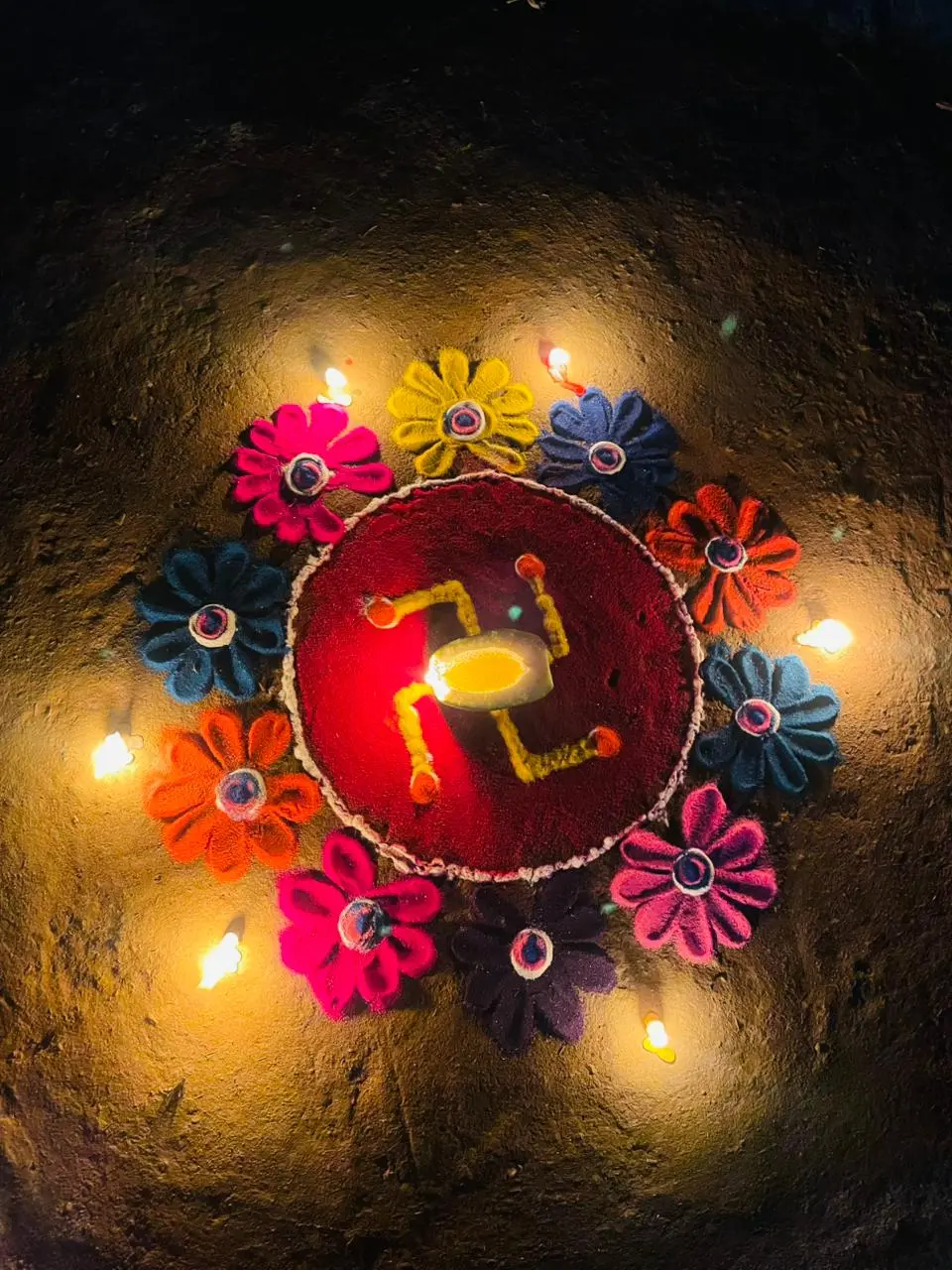
Tihar (Bhai Tika in Nepali), also known as the Festival of Lights or Deepawali, is Nepal’s second-largest Hindu festival, celebrated over five days with colourful lights, marigold flowers, oil lamps, and joyful family gatherings. Tihar is a five-day festival, so it is also called Panchak; the festival honours the unique bond between humans, animals, nature, and the divine. It is not just a religious festival but also a festival to rejoice in family bonds, especially the relationship between brothers and sisters. This festival is mostly celebrated in the month of October or November, which makes it an excellent choice for witnessing this festival and experiencing Nepalese culture.
History of Tihar
According to a popular Hindu mythology, Bhai Tika is associated with Yamaraj, the god of death, and his sister Yamuna. It is believed that Yamuna had not seen her brother for a long time. Eager to meet her brother, Yamuna invited him through various messengers. According to various sources, she first sent a crow, then a dog, and later a cow to invite Yama. Finally, Yama accepted her invitation and visited his sister, Yamuna, who warmly welcomed him by placing a colourful tika on his forehead, adorning him with flower garlands, serving delicious food and sweets, and praying for his long life and well-being. Touched by her love and devotion, Yama granted her a blessing that brothers who receive Bhai Tika from their sisters with sincerity would be blessed with a long, healthy, and prosperous life.
Alternatively, there is another popular belief that a messenger from Yamaraj has come to take a brother on what was believed to be his last day on earth, and the sister requested the messenger to wait until she completes the Bhai Tika ceremony. She welcomed and worshipped the messenger as if he were her own brother by offering him food, flowers, and tika. Moved by her kindness and devotion, the messenger granted her a wish. The sister wished for her brother to live a long, healthy, and happy life. Respecting her heartfelt prayer, the messenger returned to Yamaraj without taking her brother. Since then, Bhai Tika has been regarded as a symbol of the unbreakable bond between brothers and sisters, with sisters praying for their brothers’ long life, good health, happiness, and protection.
Religious and Cultural Significance of the Tihar Festival
Tihar holds deep religious and cultural importance in Hinduism. Unlike many festivals, Tihar honours not only gods and goddesses but also animals, nature, and the sacred bond between
family members. It is a festival dedicated to worshipping Goddess Lakshmi and honouring crows, dogs, cows, and oxen. It is celebrated with family gatherings, Deusi-Bhailo songs, receiving blessings from elders, decorating homes with lights and rangoli, and preparing
traditional foods and sweets. The festival reflects Nepal’s rich religious and cultural traditions while strengthening family bonds and community harmony. Each day of Tihar also has its own spiritual significance:
Day 1: Kag Tihar (Crow Day)
The crow is worshipped as the messenger of Yamaraj, and thus the first day of the Tihar
festival is celebrated by worshipping Crow. They are offered delicious food with platter of rice, other sorts of foods including but not limited to curry, grains and sweets. Visitors can witness families feeding crows across Nepal and observe people from every home leave the platter in an open space such as the roof of a house or a courtyard so that crow could have
feast on this day, also known as the god of death. Hoping they convey ‘good news’ of people to the ‘god of death’ and also seek blessings for protection and good fortune.
Day 2: Kukur Tihar (Dog Day)
Kukur Tihar is celebrated on the second day of Tihar, where we honour dogs for devotion, safety and security, as well as friendship.
In Nepal, dogs are respected not only as faithful friends but also as the messengers of Yama. People believed that dogs knew the danger sign before it appeared and also believed that worshipping dogs brings blessings and helps strengthen the bond between humans and animals.
On this auspicious day, both pet dogs and stray dogs are treated with love and respect. Dogs are adorned and garlanded with flowers, receive a red tika and are given meat, eggs and milk. On this day, dogs are seen all over the country with flowers, and people are appreciative of the role that dogs play in their lives as well as the significance of Kukur Tihar.
Day 3: Gai Tihar and Laxmi Puja (Cow Day and Worship of Goddess Laxmi)
The third day of Tihar is one of the most important and vibrant days of the festival. In Hindu tradition, the cow is worshipped as a symbol of prosperity, motherhood, and nourishment and is considered sacred and believed to bring good fortune and blessings. In the morning, cows are first bathed, cleaned and decorated. Flowers are tied around the neck of the cows, and a mark of red color is made on the forehead of the cow. Different shapes are drawn on the body of the cow using colourful rice flour batter, and cows are offered food items like rice pancakes and fruits as a sign of gratitude.
In the evening, families celebrate Laxmi Puja by worshipping Goddess Laxmi, the goddess of wealth, prosperity, and good fortune. Homes, courtyards, shops, and streets are cleaned and beautifully decorated with oil lamps, candles, marigold
flowers, and colourful rangoli patterns. A pathway of lights is often created from the entrance to the prayer room to welcome Goddess Laxmi into the home. Families gather to offer prayers, sweets, fruits, and flowers, hoping for happiness, peace, and prosperity in the coming year. It is also believed that goddess laxmi enter in clean and bright home.
For travellers, the glowing lights, decorated homes, and joyful atmosphere make this one of the most beautiful evenings to experience in Nepal.
Day 4: Govardhan Puja and Mha Puja
The fourth day of Tihar is celebrated in different ways by different communities across Nepal. Many Hindus observe Govardhan Puja, which is based on the story of Lord Krishna lifting Govardhan Hill to protect people and cattle from heavy rain, floods, and landslides. To mark the occasion, devotees create a small hill using cow dung, decorate it with flowers, and offer prayers as a symbol of gratitude to nature, cattle, and agriculture.
On the other hand, Mha Puja is a unique ritual and festival of the Newari community that marks the beginning of the Nepal Sambat New Year. According to the belief, each member of the family sits in front of a mandala (a design made with colored powders, flowers, and oil lamps) made by their sisters or other family members. It is a festival of self-respect and self-love. Prayers are offered for good health, long life, inner peace, and prosperity.
On the same day, sisters in every family will prepare a variety of foods, such as sel roti (fried rice flour bread), sweets, and other types of bread. These special dishes are prepared to serve their brothers the next day after putting tika.
Day 5: Bhai Tika (Brother-Sister Day)
The final day of Tihar is known as Bhai Tika, a celebration of the special bond between brothers and sisters. During this significant occasion, sisters put the saptarangi tika, the seven-shaded tika, on their brother’s forehead, place flower garlands around their necks, and offer sweets, fruits, dried nuts, and festive meals.
Sisters pray for their brother’s long life, happiness, health, prosperity, and protection. In return, brothers gift items to their sisters and reciprocate the love and respect. Family members come to one place, share food, and rejoice the day together. Family bonding is at its best on this day. This festival strengthens the bond between sisters and brothers as they meet despite being miles away. Only on this day Bal Gopaleshwar temple in Rani Pokhari, Kathmandu, is opened for all public visitors.
| Day | Date (2026) | Festivals |
| Day 1 | Saturday, 7 November | Kaag Tihar (Crow Day) |
| Day 2 | Sunday, 8 November | Kukur Tihar & Laxmi Puja (Dog Day and Worship of Goddess Laxmi) |
| Day 3 | Monday, 9 November | Gai Tihar (Cow Day)/ Govardhan Puja (Mha Puja for the Newar community) |
| Day 4 | Tuesday, 10 November | Bhai Tika (Brother-Sister Day) |
This year, Kukur Tihar and Laxmi Puja fall on the same day due to the lunar calendar. Dogs are worshipped during the day, while Laxmi Puja is celebrated in the evening and Bhai tika will be celebrated on 10 November 2026.
Importance of Tihar Festival in Nepal
- Tihar festival brings families and community together and strengthens relationships among family, siblings, relatives and community.
- Tihar festival passes down the customs, values, and rituals from one generation to the next, which helps preserve cultural and religious traditions.
- During Tihar, people play Deusi-Bhailo songs, traditional dances, and local musical performances, which help keep Nepal’s folk culture alive.
- The festival also supports local businesses and tourism, contributing to Nepal’s economy.
- The festival teaches gratitude by honouring family members, animals, nature, and Goddess Lakshmi.
Visiting Nepal During Tihar Festival
During Tihar, the whole nation is filled with colourful lights, marigold flowers, oil lamps, firecrackers, traditional music, and family gatherings.
Magical evenings await us as we witness the lighting of homes, hotels, temples, streets, and courtyards decorated with rangoli. We can enjoy the traditional Tihar performances known as Deusi Bhailo, performed by children and adults visiting the homes, singing and dancing the Tihar folk songs and offering blessings. The hosts of the homes also reward them with money and homemade sweets. These performances are held across the country, especially in rural regions, and we can have the chance to experience this unique tradition of Nepal. Moreover, this auspicious festival is also an excellent time for photography as well.
Although Tihar is a great time to visit Nepal, travellers should plan their trip carefully and in advance. Domestic flights, tourist buses, and hotels can become busy because many Nepalis travel to their hometowns to celebrate with their families.
Therefore, it is essential to book our transport and hotel accommodations in advance. Small local shops, banks, government offices, and other institutions remain closed for a few days during this festival, which may cause inconvenience to us and our travel plans. We must plan our itineraries wisely in accordance with this information.
Weather in Nepal During Tihar
As Tihar is celebrated in the months of October/ November, it falls in the autumn season in Nepal. Autumn season is considered to be the best season to visit Nepal. Most of the domestic tourism takes place during this time period, because of the weather and the holiday people get during this time of the year. So, this fact should also be considered by most foreign tourists who is planning to visit during Tihar. Weather is mostly pleasant, with blue skies, warm days, and clear views. Expect daytime temperatures in Kathmandu to range from 20-28°C (68-82
°F), with cool mornings and evenings. Further up in the mountains, the temperatures can be colder, so pack accordingly. The dry weather and fresh air create perfect conditions for sightseeing, trekking, photography, and enjoying the colourful Tihar celebrations across Nepal.
Travel Tips for Visiting Nepal During Tihar
- Book transportation and accommodation early, as buses, domestic flights, and hotels can fill up quickly with holiday travellers.
- We must keep in mind that various business organizations, government agencies, local shops, and others remain closed during this festival and plan our itineraries accordingly.
- We must also be aware that traffic can be heavier and some public transport services may operate on limited schedules.
- Keep your valuables secure in crowded markets and popular tourist areas.
- Respect local customs, such as removing your shoes before entering someone’s home or temple, and get consent before taking photos of people.
- Carry some cash because many small shops may not accept cards.
FAQs
When is Tihar this year?
This year, Tihar in Nepal will be celebrated from Saturday, 7th November to Tuesday, 10th of November 2026.
Why is the Tihar Festival celebrated?
Tihar is celebrated to worship Goddess Lakshmi, the goddess of wealth and prosperity, and to honour animals like crows, dogs, cows, and oxen for their special place in our lives. It is also a festival that brings families together, strengthens the bond between brothers and sisters, preserves Nepal’s rich cultural traditions, and spreads love, happiness, peace, and prosperity.
Why is Tihar called the Festival of Lights?
During Tihar, houses, temples, and streets are decorated with oil lamps, candles, and colourful lights to welcome Goddess Laxmi and symbolise prosperity.
Is Nepal safe to travel during the Tihar Festival?
Nepal is generally very safe to travel during the Tihar Festival. In fact, many travellers consider it one of the best times to visit because of the festive atmosphere, colourful decorations, and warm hospitality. People are usually in a festive mood, and locals often invite guests to experience the celebrations.
What activities can tourists enjoy during Tihar?
Five wonderful days of Tihar provide numerous activities for tourists. We can witness :
- Deusi-Bhailo performances,
- Capture beautiful pictures,
- Taste traditional Tihar foods,
- Visit temples during Laxmi Puja,
- Celebrate with local Nepalese families: If you are invited by local families, you can take part in Tihar celebrations, observe Gai Tihar and Mha Puja, and experience Kukur Tihar.
What is Deusi and Bhailo?
Deusi and Bhailo are traditional songs and dances performed during Tihar. People get together as a team, then they go to every household in the locality and sing songs and dance while giving blessings; and in return they receive Homemade Tihar sweets and a cash amount. Deusi-Bhailo traditionally begins on the third day of Tihar (Laxmi Puja) and is celebrated throughout the remaining days of the festival.
Are Hotels and Restaurants Open During Tihar?
Yes, most of the hotels and restaurants will be open on Tihar, particularly in the more tourist-friendly parts of Nepal such as Kathmandu, Pokhara, Chitwan, and Lumbini. Some of the hotels offer special Tihar dinners with a cultural experience for guests. However, some small family-run restaurants, local shops, banks, and government offices may close or operate with limited hours during the main festival days. Booking your accommodation and transportation in advance is recommended, as Tihar is a busy travel season in Nepal.
Can Tourists Participate in Tihar Celebrations?
Yes. Tourists are more than welcome to experience Tihar celebrations, and Nepali people are well known for their warm hospitality. If you are invited by a local family, you can join in the festivities, enjoy traditional foods, watch Deusi-Bhailo performances, and learn about the customs of each festival day. You may even receive a flower garland or tika as a sign of welcome and blessing. Simply be respectful of local traditions, ask for permission before taking photographs of people or religious ceremonies, and follow your hosts’ guidance. Participating in Tihar is a wonderful way to experience Nepal’s culture and create unforgettable memories.
What if someone doesn’t have a brother or sister? How do they celebrate Bhai Tika?
If someone doesn’t have a brother or sister, they can still celebrate Bhai Tika in Nepal. Many people celebrate with their cousins as brother or sister, and there’s also a beautiful practice where sisters put tika on each other, or brothers do the same, to honour their close bond. For those without siblings at all, Rani Pokhari in Kathmandu is a special place to
visit. The Bal Gopaleshwar Temple, which opens to the public only once a year, on Bhai Tika Day, and thousands of people come to take part. Here, strangers put symbolic multi-colored tikas and garlands on each other, and priests offer tika to those who don’t have siblings, so no one has to miss out on this heartfelt tradition.
Is Tihar celebrated only in Nepal?
Tihar is mainly celebrated in Nepal, but Nepali communities around the world also celebrate it.
What foods are eaten during Tihar?
During Tihar, families prepare a variety of traditional foods and sweets, such as sel roti, anarasa, arsa, laddu, khajuri, and kheer. Sisters especially prepare these foods for their brothers to serve them after putting tika.
Posted on