
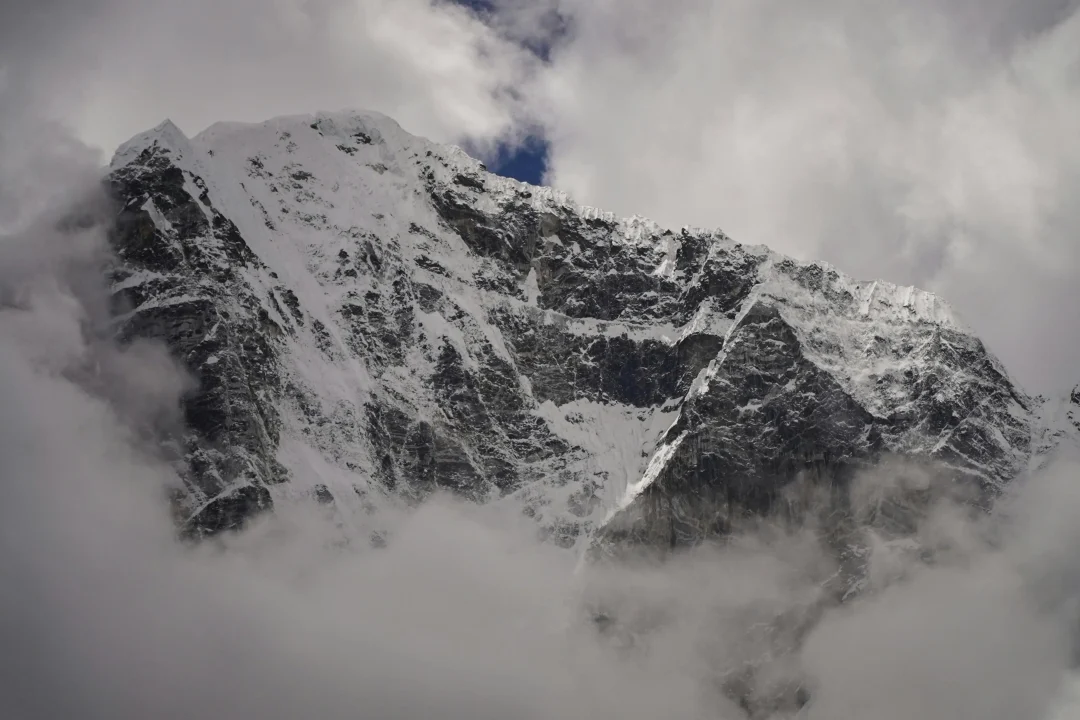

Lobuche Peak Climbing is one of the best options among many peaks around the great Himalayan mountain range at the south Asian region because it offers both trekking and mountaineering opportunity on one trip. Being a Himalayan country, Nepal always has been choice among the mountaineers around the world. Eight out of ten tallest mountain around the world including highest peak of the world – Everest locate in Nepal, so Nepal is on every mountaineers’ bucket list. Every human on this planet want to reach the top of the world but physically very few of us can achieve the Everest summit. So, for all of us who can’t summit Everest, we have to settle on climbing the other peaks around Everest and one of them is Lobuche peak climbing. As, Lobuche peak climbing gives the opportunity to explore Everest from the closest without climbing Everest it is one of the best option for those who goes on expedition around Khumbu region.
Geographically Lobuche peak has two parts – Lobuche East and Lobuche West but Lobuche East is preferred to be summited by much climbers than Lobuche West. It is best to climb Lobuche Peak because it offers majestic views of several peaks such as Mt. Everest, Pumo Ri, Amadablam and Lhotse. Many peoples may have summited Lobuche peak on the past but officially Laurence Neilson and Ang Gyalzen Sherpa were first to reach on top. They summited 6119m tall Lobuche peak on April 25, 1984 to book themselves on the history books for forever. It has snowy subsidiary summit at the South west also which is a false one but many climbers summit that too, so climbers have to avoid false summit while climbing the Lobuche East Peak.
In addition to the natural aspect, trekkers get lifetime opportunity to get enriched with ethnic Sherpa tradition all around the route. While trekking around the Khumbu region various Gompas, Monastries, Glaciers, rivers, rhododendron forest never leaves you alone while you walk forward to your destination. Passing through side by side of traditional Everest trail and scenery of great Khumbu glacier makes your journey a lifetime experience. Since the trail is in function from the long-timed back there would be no problem of guidance and basic facilities for the climbers at any point.
The success rate of the Lobuche East Peak depends on perfect weather conditions, visibility, and trail conditions. So for successful Lobuche Climbing it is essential to choose the right time. For Lobuche Peak, the best time is considered during the month of spring( March – May ) and autumn( Sep – Nov ). During this time the day time temperature for trekking and climbing remains suitable, clear view of sky allows you to enjoy the breathtaking landscape, and summit views are best.
Even if you choose the spring and autumn season for Lobuche Peak summit, the mountain remains unpredictable. So you need to prepare for the sudden weather change and be flexible in your itinerary plan.
Monsoon season( June- August) and Winter( Dec – Feb) is the off season for the Lobuche Peak Summit. During this time the weather is mostly unpredictable and trail conditions remain unsafe due to harsh weather conditions and poor visibility.
| Month | Base Camp (4,480m) | High Camp (5,400m) | Summit Day Risk |
| March | -10 to -4°C | -14 to -8°C | Moderate |
| April | -6 to 0°C | -10 to -5°C | Low |
| May | -3 to 5°C | -8 to -3°C | Low–Moderate |
| Jun–Aug | Heavy snow + rain | Unstable, wet conditions | High (avoid) |
| September | -7 to -2°C | -10 to -6°C | Moderate |
| October | -8 to -3°C | -12 to -7°C | Low |
| November | -12 to -5°C | -16 to -10°C | Moderate–High |
| Dec–Feb | -15 to -8°C | -20 to -12°C | High (avoid) |
Grade: PD+( Slightly Difficult) | NMA Group B( Classified Trekking Peak)
Before making a booking with us, the things that you should understand about Lobuche East Peak Climbing is a trekking peak that can be done by beginner climbers. Although it is graded as slightly difficult, it is not as technical as the Lobuche West summit.
Here are some factors that add difficulty to Lobuche Peak:
Altitude & Thin Air: You will spend a good amount of time above 5,000 and during the summit up to 6,000m, so Acute Mountain Sickness (AMS) is a real risk. To deal with AMS, learn the early signs of AMS, HACE, and HAPE, and follow an acclimatization schedule (climb high, sleep low). Check oxygen level by carrying a portable pulse‑oximeter and drinking enough water.
Variable Weather: The Khumbu region’s weather can turn from clear to sudden snowstorms in minutes. The high wind and heavy snowfall can drop the temperature below -20 degree celsius. So always pack with layered clothing, check the weather forecast, and trust your guide’s decision if he tells you to turn back.
Glacier & Snowfield Navigation: During the Lobuche East climbing route, you will cross the glacier and walk on a steep and snow-covered ridge.You need to use crampons, an ice axe, and a short rope to reach the summit, which can be a little challenging if you haven’t learned mountaineering skills.
Steep, Exposed Sections: During the summit, you will encounter a 30‑40° snow slope and a short exposed ridge scramble. The ground can feel like a small edge, and slipping can be dangerous. No technical climbing gear is needed, but you must have proper foot placement and good balance.
What makes the Lobuche Peak Climbing Achievable
Your journey of the Lobuche Peak Climbing starts with a cultural heritage tour in Kathmandu. After this you will take a scenic flight to Lukla( Tenzing Hillary) airport situated at an altitude of 2,846 m. From Lukla village with a climbing team, you will start your trek through the Sherpa village, passing through suspension bridges, lush forest, waterfalls, and glaciers. You will enjoy breakfast in the tea house early in the morning, leave for the hike, and enjoy lunch in the middle of the trek. Then, at the end of the day, you will check in at the tea house to stay overnight.
The teahouse offers a nice room to relax, enjoy a meal, and sleep surrounded by stunning scenery. You can also interact with local Sherpa people while staying in Sherpa teahouses to understand their unique culture, traditions, and Himalayan lifestyle.
Passing from the lower Solukhumbu region, you will reach the high-altitude Himalayan landscape in the Lobuche Base Camp. Then, early in the dawn, around 2-3 AM, we will head for the summit of Lobuche East situated at an altitude of 6,119 m.
Reaching the summit is the most challenging and rewarding trip of this journey, where every step brings you closer to the breathtaking beauty of the high Himalayas. After achieving your dream of reaching the summit, you will return to Kathmandu by Lukla flight. In the evening, you will celebrate your successful climb with Peaceful Nepal Treks & Tours during a farewell dinner at a restaurant in Thamel. You will also receive a climbing completion certificate as a memory of your incredible Himalayan adventure.
The Lobuche Peak has two summit points, one is Lobuche East(6,119 meters), and the other is Lobuche West (6,145 m). Lobuche East summit is easier technically than the Lobuche West, so many climbers choose the Lobuche East Climbing. Climbing Lobuche West is like doing the Expedition.
If you want to know which one you should check, the table below will help you answer by comparing your interests, experience, goals, and risk.
Feature | Lobuche East (6,119m) | Lobuche West (6,090m) |
Difficulty | PD+ ( Slightly Difficult), As per French-Swiss Alpine grading system ) | TD (Very Difficult), As per French-Swiss Alpine grading system |
Route Type | Fixed ropes, crampons, ice axe | Unroped, steep ice, avalanche risk |
Climbing Style | Guided commercial climb | Expedition-style, small team |
Summit Success Rate | 80–90% | 40–60% |
Permits | Climbing permit + Sagarmatha National Park and local Khumbu Permit + Refundable Garbage deposit | Climbing permit + Sagarmatha National Park and local Khumbu Permit Refundable Garbage deposit |
Best For | Beginner( who want to upgrade their skill) + Experienced Climber( for training) | Experienced mountaineers, alpinists |
Due to this reason 98% people choose to climb Lobuche East in Nepal.
Here are the top reasons why choosing the Lobuche East Peak Climbing with Peaceful Nepal can be the best decision of your life:
Day 1: Arriving at Kathmandu (1400m)
Day 2: Exploring Kathmandu
Day 3: Flight to Lukla (40 mins) then trek up to Phakding (3-4 hrs)
Day 4: Phakding to Namche Bazaar (5-6 hr)
Day 5: Acclimatization day at Namche Bazaar (3420m)
Day 6: Tyangboche from Namche Bazaar (5-6 hrs)
Day 7: Tyangboche to Dengboche (5-6 hrs)
Day 8: Dengboche to Lobuche trek (5-6 hrs)
Day 9: Climbing to Lobuche High Camp from Lobuche (3-4 hrs)
Day 10: Summiting Lobuche Peak and Returning Back (8-10 hrs)
Day 11: Returning Tyangboche from Lobuche (8-9 hrs)
Day 12: Tyangboche to Namche Bazaar (5-6 hrs)
Day 13: Namche Bazaar to Lukla (7-8 hrs)
Day 14: Flying back to Kathmandu from Lukla (40 mins)
Day 15: Departure from TIA Kathmandu
If you want to reach Lobuche or any other trekking route of Nepal, you have to land at Tribhuvan International Airport at Kathmandu first because Nepal have only one airport with capacity of landing international flights. Our representative will be at the TIA to welcome you and to take you to the hotel where you will be staying at Kathmandu. If you land early in the Kathmandu, you can roam around Thamel after locating your luggage at the hotel.
After the long flight from your country to Kathmandu, a day to acclimate at Kathmandu is a best option. Exploring both the cultural and natural aspect of temple filled Kathmandu will be a great experience before going to such a tough trip. Roaming around Swoyambhunath (monkey temple), Pashupatinath, Boudhanath helps you understanding the religious aspect of Nepal. Similarly visiting Palaces such as Kathmandu Durbar Square, Patan Durbar Square and Bhaktapur Durbar Square increases your knowledge about historical aspect of small hilly country.
It is the day to begin your step towards the Lobuche. You have to take the domestic flight up to Lukla as early you can in the morning. The high altitude and cloudy atmosphere at lukla makes flights hard to land so the visibility of the sky must be sound to reach there on the prescribed time. But don’t worry if flight gets delayed because several flights are available as soon as weather gets clear. After landing at lukla, you start forward to walking through Cheplung and Ghat until you reach to Phakding for an overnight stay.
Namche Bazaar is the heart of Khumbu Civilization. It belongs to a deep down history but has got several modern amenities to facilitate the travelers passing through it. Modern facilities at such a high altitude makes Namche Bazaar one of the best settlement around the Nepal for the tourists. Staying one more day at Namche bazaars re-energizes you with facilities such as Spa, Massage Center, Pool houses, Internet Cafes etcetera. Availability of several restaurants, ATMs, Money exchangers, Pharmacies helps you to fulfil your requirement for the remaining trip.
You can reach toward Tyangboche via Kyangjoma because they are shorter in distance but we suggest you to travel through Khumjung and Khunde because it is the most beautiful one to walk through although it is bit longer to walk pass by this route. With passing through the cold Himalayan breeze we reach towards Phunki Tenga before reaching Tyangboche. Tyangboche is famous for its historic Tyyangboche Gompa who caught accidental fire on 1989 and was destroyed but now have be renovated as it was before. You will be having dinner and the night stay at the Tyangboche for this night.
After enjoying the sunrise at the Tyangboche, the journey restarts forward to reach Dengboche. Scenic view of high standing peaks such as Mt Amadablam, Everest and other peaks never hides from your sight while you cross through Pengboche. Then after crossing Shomare and Orsho you reach upto a small settlement called Pheriche (4240m). Many of trekkers opt to staying Pheriche for one more day but we assume that you will be walking until you reach Dengboche. Walking across beautiful rhododendron forest then you will reach Dengboche after passing Inja Khola.
Until this day, effect of the high altitude can been seen on many of the trekkers but proper management with the help of trained medical staffs decreases the chances of high altitude sickness. When you start your trek for this day, at first you will cross Phulaji Kala until you reach Dhugla (4620m). A group memorial of lost memorials of climbers and Sherpas can be seen when you cross the humongous Khumbu glaciers after walking through various Kharkas. Then you will reach toward the summer only settlement of Lobuche to take your ambition of this trek quite closer to completion.
After staying for a cold night at Lobuche you again start your goal with keeping beautiful sight of Pumo Ri peak along the way. You have to pass through Lobuche glacier on the way which is quite closer to Italian Research Center. As Lobuche High Camp is the highest point before the climb of Lobuche East, staying at here challenges you with its cold weather and the High altitude sickness problems. So accommodating yourself at this Camp examines the core strength of yourself towards your ambition for sure.
Finally, the day has come for which you carry forwarded such a tough journey because it is a day to summit Lobuche East. It surely is the toughest day among all because reaching forward the altitude of 6119m is not easy at all. With the assistance of mountain Ning gears and equipment you will be guided towards summit by experienced Sherpa guides. Keeping Lobuche glacier at right you will climb hard towards top by using all the accessories carried up to now. Help of oxygen cylinders is a must to escape suffocation on such altitude and don’t hesitate to return back as early as possible after summiting to avoid any quick weather changes.
As you have accomplished everything what you wanted on this trip, from this day you will start returning back. You have to descend down via same route as you ascended from Tyangboche. You will cover the double distance you covered earlier because it is walking down instead of climbing up. You will again pass through Dengboche, Pheriche, Phunki Tenga, Khunde, Khumjung again until you reach Tyangboche again.
After staying at Tyangboche, it’s everyone’s day to enjoy the beautiful Namche Bazaar again. Starting early from Tengboche provides enough time to refresh yourself at Namche Bazaar after such a high demanding trip. Many of the trekkers, opt to stay one more day at here to enjoy more aspect of Namche Bazaar but we suggest that at least an overnight stay to re-energies yourself at Namche Bazaar.
Assuming you stay only for overnight at Namche Bazaar, this is the day when you again trek back to Lukla. You will ascend across Jorsale Benkar, Monjo, Phakding, Ghat and Cheplung until youn reach Lukla again. Reaching Lukla early provides you the opportunity to re-confirm your air ticket for Kathmandu so, we suggest you to start from Namche Bazaar at early as possible. After reaching Lukla and finding the place to stay, go to Tenzing Hillary Airport and re-confirm your flight booking for Kathmandu tomorrow.
It’s the day to return the capital city of Nepal – Kathmandu again. You will land early at Kathmandu if weather becomes good and visibility gets clearer but have patience if the flight get delays. As soon as weather gets clearer, you will land at Kathmandu Airport in just 40 minutes. Have rest for some time at the hotel, then look forward to enjoy the night life of this historic ancient valley of Kathmandu before returning back to hotel for a sound sleep.
Tourists tend to increase their trip at Nepal in general so we certainly believe that you would look forward to extend your stay at Nepal for few more days on this point of time. But if you have limitation of time and waiting work schedule of work back home, then we have to bid farewell for you with a heavy heart. Our representative will drop you Airport and will also help you in your departure document processing. We will be grateful to see you soon in no time back here again. And we also believe that Nepal is definitely on your good books. Have a safe flight!! Namaste !!
After booking is confirmed, we will book the 3-star hotel for you, where you will get a twin room with facilities of wifi and modern amenities. During your trek, you will stay in the locally owned tea house. We will book the best available tea house for you. Inside the tea house, you will get twin sharing beds with a warm blanket. There will be sharing toilets with running water but no amenities. The tea house provides the facility of charging, wifi and a hot shower at a small extra cost( around NPR 200-300). However, these facilities are limited, and above base camp, they are not available or very basic.
When you reach the Lobuche High Camp, our climbing team will set up the tent for you. You will stay in the tent, and there will be a separate tent for the kitchen and toilets.
Note: In the lower Everest Region, climbers can upgrade their room to a single bed with an attached bathroom. You need to pay a separate cost for this and need to inform us in advance due to the limited number.
The Everest region is one of the most developed trekking routes compared to Annapurna, Langtang and other trekking regions due to Mt Everest Expedition and Everest Base Camp Trek.
Here you can find a wide variety of food items in the tea house menu especially in lower Khumbu village. The food items in the menu become simpler when you reach the high altitude. All the meals that will be served for you will be fresh and locally produce.
Let’s see the menu which you can expect on tea house:
Breakfast Menu
Lunch and Dinner Menu
Drinks Items
Snacks Items
Note: For the drinks and snacks climbers need to pay on their own as it will not be included in the package.
Our Lobuche Peak Climbing Package price starts from USD 2800 per person. Our all-inclusive package includes permits, Lukla flight, road transportation, logistics, accommodation, meals, and wages of guide and porter. At an affordable price with full safety, you can enjoy the mountain adventure, and we also offer a special group discount.
| Group Size | Price Per Person |
| 1 person | $2,800 |
| 2–4 people | $2,700 |
| 5–8 people | $2,600 |
| 9–12 people | $2,500 |
Climbers need to secure the climbing permit along with a local permit to grant access to the Lobuche Peak with the help of a tour operator. Here are the required permits that you need to carry with you during the trip. All this permit will be arranged by us when you send your document( scanned passport and pp size photograph).
| Permit Type | Issuing Authority | Cost (USD) |
| Lobuche Peak Climbing Permit | Nepal Mountaineering Association (NMA) | $250 (spring) / $125 (autumn & winter off-season) |
| Sagarmatha National Park Entry Permit | Department of National Parks & Wildlife Conservation | NPR 3,000 per person |
| Khumbu Pasang Lhamu Rural Municipality Permit | Local Government (Khumbu Region) | NPR 3,000 per person |
Here are the important tips that you can follow when preparing for the summit:
To reach the summit of the Lobuche Peak, you will pass through several Sherpa villages like Phakding, Namche Bazaar, Dengboche, and Lobuche. While passing through this village, you will encounter the Buddhist religion. Everest is the home of legendary climber Tenzing Norgay Sherpa, who was born in Tengboche Village.
The majority of people who live here are Sherpa, and locals here are known for their warm hospitality, strong mountaineering skills, and deep spiritual connection to the Himalayas. The village here is decorated with a player flag, many walls, spinning wheels, and a Buddhist monastery.
Sagarmatha National Park controls this region as it is home to 28 species of mammals, and over 200 species of birds, including rare animals such as the snow leopard, red panda, musk deer, and Himalayan tahr. Their biggest festival is Mani Rimdu, which they celebrate by performing rituals in Tengboche Monastery, which occurs in October or November.
To reach the trailhead of the Lobuche Peak Climbing from Kathmandu, you will take a domestic flight to Lukla Airport( Tenzing Hillary Airport). Lukla is the main entrance for Lobuche Peak climbing in the Everest Region. The flight distance from Kathmandu to Lukla Airport is just 35 minutes. The airlines that operate the daily morning flight to Lukla airport are Tara Air, Summit Air, and Sita Air. To reach the Tribhuvan International domestic terminal, we will arrange private transportation for you. We will pick you up from your hotel doorstep. The airline mostly allowed the baggage limit of 10 kg for checked and 5 kg for hand carry.
Note: During the peak trekking season( Spring and Autumn), the Lukla flight is diverted to Ramechhap Manthali Airport. If your flight is from Manthali airport, you need to take a 4-5 hour drive in our private Jeep.
Pro Tip: The Lukla flight is weather-dependent, so have some buffer days in your travel plan in case your flight is delayed or cancelled.
Before heading for the Lobuche summit from Kathmandu, we suggest you purchase the NTC SIM as it works better than the NCELL. You can purchase the NTC SIM from the Tribhuvan Airport or from an authorized shop in Kathmandu. You can use the local SIM for communication with your friends and family, and also use mobile internet during the hike.
Mobile network works fine in the lower village, but it might be spotty in some places and not reachable at high altitude. Above Base Camp, there will be a mobile network and Wifi.
Wifi is available only inside the tea house, but you need to pay an extra cost for that connection. They will charge you around( NPR 200 – NPR 500). If the trekkers are huge in number in the teahouse, the Wifi might be slow due to heavy use.
During the summit, since no network is available, your guide will carry the satellite phone to contact for emergencies. Peaceful Nepal from Kathmandu will track your progress daily.
Note: Carrying the offline Map, power bank, and GPS watch will be very helpful.
During the trek and climbing while heading for the Lobuche Summit, you will follow the simple, focused, and energy- conserved rhythm.
5:30 AM – Wake up and get refreshed
6:00 AM – Breakfast (porridge, eggs, bread, butter tea)
6:30 AM – Get ready for the hike by carrying your daypack
11:30 AM – 1 PM – Lunch at a local teahouse in the middle of the journey.
1:30 PM – Continue trekking toward the destination
4 PM – 5 PM – Reach Teahouse, check in, and relax
6 PM – 7 PM – Enjoy Dinner at the communal dining with your team
8 PM – Sleep
Tip: Use trekking poles, wear glacier glasses, and keep moving — even on rest days.
This Lobuche Peak climbing journey takes you to a remote location where hospital and medical facilities are very limited. For the emergency, you need to be evacuated by helicopter to get the treatment in Kathmandu. So it is important to have travel and health insurance to cover the risk and for financial protection.
Make sure to purchase the travel insurance which covers:
Before heading for the high altitude, it is important for all the trekkers and climbers to be aware of altitude sickness. Altitude sickness, also called mountain sickness, happens when you travel to high altitudes due to low levels of oxygen.
When you catch altitude sickness, you will see the following symptoms:
Note: These are the early symptoms of AMS, which can be cured by taking rest and descending to a lower altitude. If it turns into HACE and HAPE, you need to seek immediate helicopter evacuation.
Here are the acclimatization tips that helps to prevent altitude sickness:
SIDE TRIPS & EXTENSIONS
You can combine the Lobuche Peak Climbing with
To book the Lobuche Peak journey with Peaceful Nepal you need:
The climbing gear and equipment are the most essential part of your climbing journey. So always invest in high-quality gear items. Below is the comprehensive packing list for the Lobuche Peak Climbing, you can follow when packing:
Here the items that will be provided to you but you need to return after completion:
Note: If you haven’t purchased the climbing gear you can rent it here in Thamel at an affordable price.
Lobuche Peak is one of the highest altitude trekking peaks in Nepal, which stands at an altitude of 6,119 meters (20,075 feet) above sea level.
There are two main summits for the Lobuche Peak: Lobuche East (6,119m) and Lobuche West (6,145m). Due to being easier and less challenging than Lobuche West, the Lobuche East summit is very popular in Nepal.
Yes, the Lobuche Peak summit is possible for beginner climbers when done with the right trekking agency and prepared physically. Although technical climbing experience is not required, having basic mountaineering skills will be very helpful.
Yes, to get the permit from NAM for the Lobuche Peak climbing, hiring a guide is compulsory. The hiring Guide also adds safety and provides emergency support during tough times.
Yes, a pair of double‑layer, insulated mountaineering boots (e.g., La Sportiva Trango or Scarpa Phantom) is recommended for the cold, mixed terrain above 5,500 m.
We provide 1 porter to every two trekkers. Our porter carries a maximum weight of 25kg. So make sure your luggage doesn't weigh more than 10-12 kg.
There is a mandatory rule for tipping, but there is a culture of tipping after the end of the trek and climbing in Nepal to show respect for their hard work. You can tip as much as you want, as there is no limit.
You need to inform your trekking guide and check your health condition. He will decide whether to continue, descend, or provide helicopter evacuation.
For the personal expenses, such as hot showers, wifi, charging, buying snacks, etc., you need to spend on your own. So carry at least NPR 10,000 - 15,000 cash with you due to limited ATM facilities.
The chances of Lukla flight delay or cancellation are common due to weather issues. So having 1-2 buffer days in your itinerary will be helpful. If your flight is cancelled, the airline will reschedule your flight on the next possible day.
Respect the local Sherpa culture and traditions, and during your visit to the monastery, always walk clockwise. Seek permission before taking pictures of locals and sacred sites.
Drones are allowed, but you must obtain a special permit from the Nepalese Department of Tourism. The permit will cost you USD 18,000, and it takes at least a month to obtain the permit.
Daytime temperatures hover around –5 °C to –10 °C (23 °F to 14 °F); nighttime can plunge to –20 °C (–4 °F) or lower, especially in early May or late October.
Mera(6,476 m) and Island Peak(Imja Tse, 6,189 m) are considered beginner-friendly and comparatively easier than Lobuche Peak.


If you are looking for travel in Nepal, Bishnu will help you to make your perfect trip plan. He has been working on this industry for more than 10 years