

Imja Tse, most popularly known as island peak is situated at the altitude of 6189m/20305ft above from sea level. It lies on the eastern part of Himalayas of Nepal. And it is named after its shape which appears like an island on a sea of ice when viewed from highest elevation point of Dingboche. Nepal is a country which is full of ranges and mountainous endeavor. Most of the people are being busy with scheduled works. Apart from this, people want to have life time remarkable experience and moments to add on their bucket list of life journey. However, island peak climbing is one of the mountaineering journeys to give extra enticing moments to any kind of age group peoples who have desire to climb the Himalayas and revives themselves spiritually, mentally and emotionally. Island peak is spread over the south end of Lhotse Shar.
In 1953, members of British expedition Mount Everest expedition had named the Island Peak. During the trek journey to island peak, several cultures, traditions of Sherpa communities and well blended beautiful nature of Khumbu region can be explored. Additionally, we will grab opportunity to trek on Kalapatthar (5550m) and Everest Base Camp (5357m) during our trek trail. As we stand at the elevation point of island peak, we can get an incredible and mesmerizing view of world highest mountain (Mount Everest),Mt Makalu and whole valley of Lhotse.
The well-trained and highly experienced trek guide on trekking fields will take your expedition responsibly and bring you back safely also, whenever the training needed, they will help you to overcome such training. Throughout the trekking adventure, a well experienced Sherpa cook will take care of your balance diets. Our accommodation will be arranged on the best tea houses, local guest houses, tents, lodges available in the area where we will march our trek trail on the similar day.
Island Peak Climbing is best done during the spring (March- May) and the fall (September- November) seasons. The months also have clear skies, predictable weather, and temperatures are warmer during the day, which makes the whole journey hustle-free from Lukla to the summit. The mountain scenes are clean, and the paths are generally dry in spring and autumn but rainfall and snowfall are still common in the Himalayas.
The two seasons have a reputation for consistent flights to Lukla, which is beneficial towards the beginning and the completion of the itinerary. As your visit is based on the 15-day expedition, the good weather makes every day go by without errors; you explore Kathmandu, then arrive at the base camp of Chhukhung, and lastly, the summit push.
The risk associated with monsoon climbing (June to August) is that the trails become slippery and flights frequently get delayed, and further, the visibility is extremely low. The winter (December to February) is characterized by heavy snowfall, bitter winds, and very cold nights, particularly in the areas of Dingboche, Chhukhung, and Base Camp. All these conditions complicate climbing and risk the possibility of height problems.
The trails are more crowded during the peak seasons, and the teahouses are easily filled, although it feels very dynamic. You will find climbers of all kinds all over the world, and guide lines get in very good condition with ropes fixed and instructed teams. This comes in handy in difficult areas, especially on the summit ridge.
All in all, to do the Island Peak Climbing, Spring and Autumn present the safest and most enjoyable journey, and therefore, would be the best period to pursue your entire Day 1-15 program without significant weather disturbances.
The Island Peak Climbing is a combination of trekking and actual climbing, making it more challenging as compared to a generic Himalayan trek. The route to Chhukhung is not very difficult, and only average trekkers will manage the route to Chhukhung, yet getting up the mountain to the summit will demand the application of correct techniques and ability on the steep ground. This combination is one of the factors that make the trip challenging and rewarding.
The summit day has technical parts that demand the use of crampons, an ice axe, ropes, and a harness. You pass over a glacier, walk in crevasses, and then the last headwall before you reach the summit ridge. These parts demand concentration and constant movement, but the climbing guide educates such skills at Base Camp; hence, beginners can learn them safely.
The schedule will help to minimise the risk of altitude sickness. The rest day in Namche will make your body accustomed to higher elevation earlier in the journey, and the slow pace of climbing through Dingboche and Chhukhung will give your body time to adjust. This slow climb is the primary factor that causes the itinerary to be planned in 15 days.
AMS, about altitude sickness, may trigger the following conditions: headache, dizziness, nausea, fatigue, and sleep difficulties. The oxygen level will be monitored twice a day to maintain the safety of all passengers using the oxygen meter provided in the package. This assists in the early warning of the symptoms that get big.
Senior guides and Sherpa climbers are significantly engaged during the journey. They control the speed, attach ropes to some challenging areas, carry safety gear, and assist you when pushing the summit. Above Base Camp, their advice is particularly relevant in the areas further on, as climbing is harder.
The package already includes rescue insurance for the high-altitude staff members, yet trekkers have to possess their own travel and emergency rescue insurance. The reason behind this is that it may be necessary to evacuate people by helicopter in case AMS or injuries are high in altitude.
The day-to-day living on the Island Peak Climbing is organizationally satisfying. The majority of the days begin at the beginning of the morning, and during that time, trekkers can move on great distances as the weather is peaceful. You would be walking with a slow pace with brief pauses to savor the breath-taking scenery and breathe it all in.
On the way, you will pass by suspension bridges, small villages, and get to know the local culture of the Sherpa people in the first person. Monasteries that are situated on hillsides bring a serene beauty to the road.
The walk between Phakding and Namche Bazaar is a gradual ascent with varying scenery. You pass through green woods and stream crossings to hard Rocky Mountains growing higher and higher. The Ama Dablam, Namche, and Tengboche are houses where the Everest and other mountains are visible, and the streets are crossed by mani walls and prayer flags. Dingboche and Chhukhung lead you to greater heights and glaciers, making your body ready for the Island Peak base camp and the summit push.
The climax day is the point of view. You will wake up in the middle of the night, the ride starts in the darkness, and by sunrise, you will be on the mountain top. Crampons, harness and ropes are used to help up the steep headwall since it is steep. It ends with an amazing view of the sunrise over the Himalayas and is remembered eternally after the hard climb of Island Peak Climbing.
During the expedition, there are guides, porters, and Sherpas who offer much-needed assistance. They bring equipment and install camps, repair rope, and provide safety in technical parts. Their experience comes to the aid of first-time climbers and experienced ones.
The trek towards Lukla, after the climb, is a celebration cum reflection. You are driven back to Kathmandu, where you take a farewell dinner, with performances of the culture, with a share of stories and experiences of the journey.
The weather is unpredictable, nights are cold, and days of walking are long, which are physically and mentally challenging. It is a life-altering experience that is combined with awe-inspiring views, cultural experiences, and the accomplishment of reaching the summit of Island Peak Climbing journey.
Day 1: Arrival at Kathmandu
Day 2: Sightseeing and Gear shopping
Day 3: Fly to Lukla and Trek to Phakding
Day 4: Trek from Phakding to Namche Bazar
Day 5: Rest day
Day 6: Trek from Namche to Tengboche
Day 7: Trek from Tengboche to Dingboche
Day 8: Trek from Dengboche to Chhukhung
Day 9: Trek from Chhukhung to Island Base Camp
Day 10: Base Camp to Island Peak Summit
Day 11: Descend from Chhukhung to Pangboche
Day 12: Trek from Pangboche to Namche Bazzar
Day 13: Trek from Namche Bazzar to Lukla
Day 14: Flight from Lukla to Kathmandu
Day 15: Final Departure from Kathmandu
On your arrival at one and only international airport of Nepal, you will be received by our responsible representatives from arrival terminal. After the short welcome and greeting program, you will be escorted to hotel, you will be staying overnight. At evening, the tour guide, throughout your trek adventure will give you the information related about trek trail starting from tomorrow.
Early morning at hotel lane, you will be serving a desired breakfast. Later on, the tour guide will come to receive you for sightseeing. On this day, we will be visiting to famous historical and cultural places of Kathmandu valley. Major places like boudhanath stupa, Pashupathinath temple, Kathmandu Durbar Square and Swyabhunath stupa. At late afternoon/ evening we will find ourselves in famous tourist hub "thamel area" for gear shopping and other essentials needed for trek journey.
Trek hours: 3 to 4 hours
The driver will drop entire groups to domestic airport for further adventure. The flight of 35 minutes from domestic airport will take us to Lukla airport. The flight will be thrilling and enticing as the lukla airport is enlisted on the world dangerous airport. As we landed on Lukla airport our remaining trek crew will welcome us and we will join our trek trail together and we will be heading towards Phakding. Our overnight stay will be at Phakding.
Trek hours: 5 to 6 hours
Leaving the Phakding behind, we will start our next destination Namche Bazar for today. The walk of 5 to 6 hours will take us to the Sherpa town, Namche Bazar. Namche bazar is a main economic hub in the Everest region. We will be visiting the Sagarmatha National Park and museum by getting registered to enter inside there and we will make the way to Namche Bazar. On our way, we will be walking on the bank of Dudh koshi river and later we will pass through Tawaa and larja Dhovan to reach Namche Bazar. Our overnight stay will be at best available hotel/lodge of Namache Bazar.
A proper rest is needed before climbing any kind of peaks. We will be resting all day and get a proper sound sleep to acclimatize ourselves for further adventure. Roaming around the Namche and having the snacks and lunch on local hotels for real taste of Nepali cuisine we will be enrolling around Sherpa town and spend rest of the time on the hotel room of Namche.
Trek hours: 5 to 6 hours
There are several routes available to reach Tengboche. We will be walking through long route by capturing the mesmerizing views of ridges, landscapes, forests through the way of Khumjjing and Khunde. During our trek trail, we will be passing through Phunki Tenga to reach the Tengboche. additionally, we will visit Tengboche Gompa and do some prayers. Our overnight stay will be at Camp/ tents if the good quality accommodation can't be found.
Trek hours: 4 hours
After early morning after breakfast we will start our trek towards pangboche. On the way we will pass Syomare and Orshe moreover we will be passing Imja Khola before we start our uphill climb to Pheriche. Rhododendrons, flora, fauna all over the way gives you a good vibe till you make your way to Dingboche. Overnight stay will be at teahouse of Dingboche.
Trek hours: 3 to 4 hours
We will start our journey towards Chhukung valley. Within the three to four hours of trek on gravel road we will reach to Chhukung valley. Chhukhung is located on the altitude of 4750m above from sea level. At evening we will enjoy the cultural programs perform by Chhukung community and enrolling with people there, will make our time enjoyable and remarkable. Our overnight stay will be at quality hotel/ lodges available at Chhukung Valley.
Trek hours: 4 to 5 hours
Leaving the beautiful Chhukung valley behind, we will march towards our next destination "Island base Camp". Island Base camp is located on the altitude of 5150m above from sea level. A walk of merely 4 to 5 hours will take us towards the feat of Island Base Camp. We will be staying at tents house overnight. As the real summit day is tomorrow, the guide will provide information which is very useful.
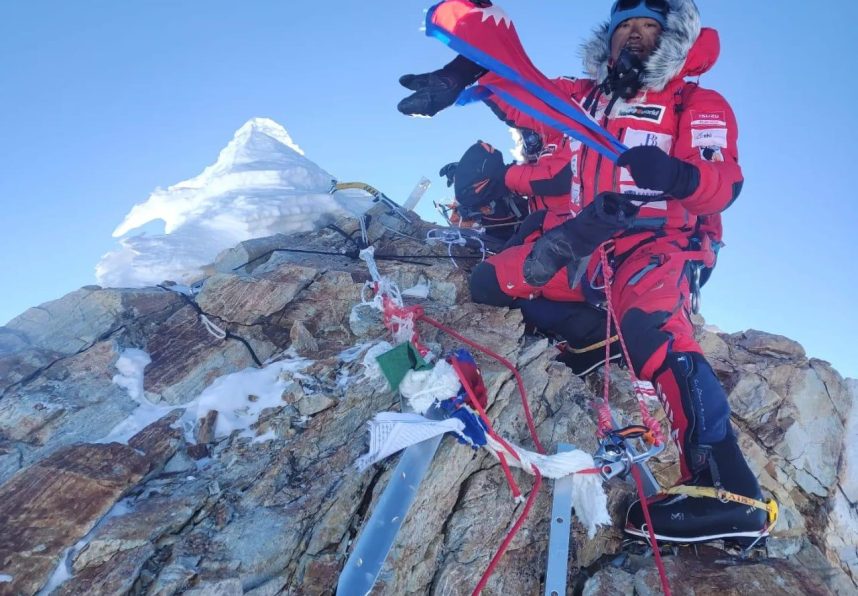
Without any delay after breakfast, we will start our trek trail to summit Island Peak. We will observe and explore mesmerizing shadow of peaks in front of us. Using the help of trekking gears and guide notes we will be able to summit the most awaited destination of our adventure. The lasts 40 meters will be challenging and difficult to climb but as we go and summit the Island Peak, we will be found ourselves on the lap of Himalayas. The incredible view will soothe you. we can capture the moment through various gadgets such as Camera, mobile phone. After certain time spending on the peak, we will descend our journey towards to Chhukung to celebrate our successful adventure.
Trek hours: 5 hours
Nearly the walk of five hours will take us towards Pangboche. We will visit several monasteries and Gompas there as pangboche is very famous for majestic view of old Monastery. On the way the scenic view of villages, farmers working on the terraces fields and waterfalls gives you a best opportunity to capture the real views of Nepal.
Trek hours: 4 to 5 hours
After having warm breakfast at Pangboche, we will embark our trek tail towards Namche Bazar. A walk of merely five hours will take us to Namche. We can explore the beauty of Namche on this day too. Our overnight say will be at lodges of Namche.
Trek hours: 7 to 8 hours
We will be descending down towards Lukla on this day. Day 13 will be the final day to spend the quality time at the lap of Himalayas. By crossing the several places such as Phakding, Cheplung, Monjo we will finally reach to Lukla where we will be staying overnight.
Flight hours: 35 minutes
By checking the weather condition, we will take our first flight to Kathmandu. After we landed at domestic airport, we will be received by our driver and he will escort the team to hotel room. You can either roam around the city or you can rest all day at your hotel. Overnight stay at quality hotel of Kathmandu.
After receiving a small farewell from our side, our responsible representative will drop you off at the International airport, three hours before boarding pass. We believe that you will obviously make a move to return back again to explore the hidden beauty of Nepal.
Your Island Peak Climbing trip starts with a relaxing stay in Kathmandu, where you take three nights ‘ stay, inclusive of breakfast. These are the nights when you get a chance to have a rest upon arrival in the city, to explore it, and to prepare your gear before flying to Lukla. Kathmandu hotels typically offer private rooms, hot showers, and all the essential amenities.
Thereafter, after entering the trekking area, you spend your night in teahouses and lodges on the trail. The rooms are plain, and mostly with twin beds, warm blankets and common bathrooms. Evenings, the dining areas are kept warm and thus become the centre of rest, dining, and socializing with other trekkers. The facilities become simpler with the higher height levels, but comfortable enough to have a good rest.
The tented camps are also part of the package, and the accommodation at Island Peak Base Camp is shifted to tented camps. The team puts these tents up and arranges them in a manner that all people have sufficient space to sleep and to carry about their personal equipment. You are only walking with a light daypack, as Porters carry the majority of your equipment.
There is also a sleeping bag, down jacket, and duffel bag in the package that will be used during the Island Peak Climbing trek and climb. They will have to come back once the trip is over, but they keep you warm and cozy during the trip.
Meals are eaten in teahouses on the trek, and the food is warm, filling, and most of the travelers are familiar with it. Dishes such as dal bhat, soups, noodles, pasta, pancakes, and eggs can be expected. These meals will provide you with a long-term energy supply during the weight walking days. Simple and light meals at higher altitudes would aid in the additional comfort of digestion.
It covers three meals a day during the period of the Island Peak Climbing trek. There are also three meals cooked by the crew, made fresh and hygienic at Island Peak Base Camp. Not all drinks are included, including such drinks as bottled water, soft drinks, alcohol, mineral water, chocolate drinks, or energy drinks.
As hydration at high altitude is of high essence, the majority of trekkers in the high altitude take the boiled water in the teahouses or use water purification pills to make tap water safe.
On going back to Kathmandu, you have a farewell dinner with a cultural show. It is a nice way to make the Island Peak Climbing trip special, tell the group stories, and have one last Nepali meal before getting back home.
Various relevant climbing permits are needed to be in order to climb Island Peak, and these are all part of the package. These are the Sagarmatha National Park Entry Permit, TIMS (Trekking Information Management System) Card, and Island Peak Climbing Permit that are issued by the Nepal government.
The group takes care of all the permit paperwork on your behalf, and therefore, trekkers need not be concerned with filling out forms or making payments. It will have a comfortable beginning of the trek, and you will be able to concentrate on preparation and acclimatization.
The trail permits are inspected in different places of entry, like Lukla, Namche Bazaar, and Sagarmatha National Park checkpoints. The most important thing during trekking and climbing is to have all the permits to ensure safety and legal requirements. You can have the adventure and not be bothered with administration when the team does all the arrangements.
Yeah, beginners are welcome to participate in the Island Peak Climbing, although they should be in good physical shape. The expedition consists of numerous days of hiking at elevated levels, and thus, you ought to be accustomed to numerous hours on the trail and constant hiking up mountains. It is a big difference between a trip that was an enjoyable and safe experience and one that was not built on basic fitness before the trip.
It is only on the summit day that the technical aspect of the climb occurs, and you do not have to have prior climbing experience to that extent. The climbing guide in Island Peak Base camp conducts technical training, and there you are taught the use of a harness, crampons, ropes, and an ice axe. This training makes those who are beginners feel better and ready for the glacier and the summit ridge.
Sherpa climbers help you to climb. They nix ropes, keep safety gear in check, and show you the way step by step on the more difficult parts. Their experience also makes the climb very safe, particularly for those who are new.
Although a novice, preparation is necessary for Island Peak Climbing. Proper equipment, high-altitude rescue travel insurance, high-altitude high-risk training before the trip and proper equipment, are necessities. Even the beginners can make it through this climb when they have the right attitude and have the team behind them.
Due to proper preparation, the Island Peak Climbing is made a lot more fun. You do not have to be a professional sports person, yet you ought to develop a good basic fitness. Adequate exercise, such as cardio, such as hiking, running, bicycling, or lengthy walks, is a good way to build stamina during the lengthy trekking days.
Again, inclusion of leg, core, and shoulder strength training, as well as climbing the stairs, will equip your body with the challenges of steep parts and the extreme peak push.
It is equally important that one is mentally prepared. It is characterized by cold mornings, days of long walks on your feet, and a very early wake-up on summit day. It is important to know that these challenges are part of the journey so that you can remain focused and calm when the ground gets challenging. It is always worthwhile to have a positive attitude toward the climb.
The preparation of gear is quite significant for your comfort and safety. You will require a set of clothes that will be layered to adjust to the changing weather as the climate varies rapidly at the elevation.
Crampons, a harness, and an ice axe are not included in the package, and to this end, you can bring your own, purchase/rent them. Even the itinerary consists of a gear shopping day in Kathmandu on Day 2, which assists you in acquiring what you have left out.
Personal carrying is also worthwhile. Carry a personal medicine, blister care kit, and lightweight energy snacks. These little things will go a long way when walking long distances.
After proper physical training, mind training, and equipment, you will be sure that you will be prepared to approach Island Peak Climbing.
Island Peak Climbing starts at Kathmandu, 1,400 meters up to the peak at 6,189 meters. One of the most significant elements of the trip is this gradual increase in altitude so that your body can adapt to the air that is becoming thinner at progressively higher altitudes.
The adventure begins at Kathmandu, where the initial flight to Lukla at an altitude of 2,860 meters is taken, and then a leisurely hike is taken to Phakding at an altitude of 2,610 meters. The path ascends then to Namche Bazaar at 3,440 meters, where the trekkers are likely to experience initial alterations in breathing and energy. Some of the time at this place will be helpful when the days come.
The path will lead you to Tengboche (3,860 meters) and, further, to Dingboche (4,410 meters), an altitude that is relatively much higher, where the air will definitely be noticeably thinner. Going up to Chhukhung at an altitude of 4,730 meters forms another acclimatization step before proceeding to Island Peak Base Camp at an altitude of 5,200 meters. The purpose of every stop will be to provide your body with relaxation and to adapt correctly.
In terms of total trekking, the round trip covers a distance of approximately 105 to 115 kilometers, which is distributed over the 15-day itinerary comfortably. The slow increase eliminates the impact of altitude sickness, and that is the reason the days of acclimatization and gradual walking have such an essential role.
Increasing the altitude may have an impact on sleep, appetite, and performance. Decreased breaths and slow pace are observed by many trekkers as they arrive at Chhukhung at Base Camp. This is absolutely normal, and the itinerary will assist her to safely adjust herself as she prepares to reach the summit.
The Island Peak Climbing is characterized by most of the trekking days of 5 to 7 hours of walking. It is an adequate speed that allows the day to be manageable and allows your body enough time to adjust to the increased altitude. The higher up you go, the slower the pace of walking is going to be, of course, but the distance does not have to be long, either.
During the journey, like the one that takes one across Tengboche to Dingboche, it can take 6-8 hours. The trail is constant, and each step gets heavier with the elevation, hence it is not unusual to take frequent rests. Even the days that are a bit shorter, such as those between Phakding and Namche, may seem to be demanding as the road up the hill is rapidly steep when it leads towards Namche Bazaar.
The summit day is the most difficult task of the trip, as it can take between 10 and 14 hours in case of bad weather and snow. The team then walks at a slow pace to ensure safety, conserve energy, and ensure that all people get used to the thin air.
Throughout the Island Peak Climbing trek, there are numerous places of charge that charge a small fee to charge your devices, particularly above Namche Bazaar. It is also a good idea to always have power banks or solar chargers in order to stay connected because at higher altitudes, the power supply may be minimal and at times unreliable.
Some teahouses can get internet access via Everest Link or Wi-Fi, but this is also a paid service and can be slow. Mobile networks such as the Ncell and NTC apply to the trail up to some point, and the signal is weak near Dingboche, Chhukhung, and Base Camp.
Guides may be able to carry satellite phones to Base Camp or up the mountain in case of a safety or emergency. Such phones are useful in the coordination of rescue or weather update check where there is no mobile signal. Generally, being prepared will make sure that you will be able to keep your devices powered and be in contact during the Island Peak Climbing journey.
The Island Peak Climbing starts with the arrival and departure transportation services using a personal vehicle, which means that you can reach your hotel quickly after arrival and use it to get to the airport afterward. Kathmandu sightseeing is also organized, and hence one can explore Kathmandu at their own leisure time without having to think about doing it in the country.
There will be fixed flights in and out of Lukla, the entry point to the Everest zone. These flights are time-saving, and they provide you with additional energy for trekking. Nevertheless, the Lukla flights are not always available, and there is a delay time, particularly during seasons that are not perfectly suited to trekking.
The itinerary consists of all the transportation and is well planned to go smoothly with the days spent trekking. Airport transfer to sightseeing, domestic flights, and transportation between trailheads are all organized in such a way that the trekkers do not think about logistics, but the climb. This fully coordinated method will make sure that you have a stress-free and comfortable beginning and ending of your adventure.
Travel insurance for all trekkers visiting Island Peak Climbing must contain emergency rescue. This is necessary since the climbs are at high altitudes and the conditions are prone to change very quickly.
The company also gives rescue insurance to staff, guides, and Sherpas; however, all clients have a duty of securing their own insurance. In case of no proper coverage, the emergencies located high above would be complex and costly.
You should have insurance with the special feature of the altitude going higher than 6,000 meters and the option of helicopter evacuation in the event of extreme high-altitude sickness or injury. You must ensure that you check your policy before leaving.
Being insured means one can get to sleep, knowing the trek and climb are safe. It also ensures that medical emergencies can be responded to effectively in the distant parts of the Everest area.
Island Peak Climbing may be accessed in a few different ways, and some of the trekkers opt to use it alongside other popular routes. A favorite alternative is to walk to the base camp of Everest and Kala Patthar and then proceed to Island Peak. The path provides a great degree of acclimatization and also allows you to see two significant attractions in the Everest area.
The addition of the Three Passes Trek, which consists of Kongma La, Cho La, and Renjo La, is also another option. This is a more difficult and extended one that is ideal for the trekkers who wish to receive an entire high-altitude experience prior to attempting to climb.
Your Island Peak Climbing itinerary is the friendliest and family-oriented acclimatization-wise. It also takes it easy in climbing the mountain and allows your body sufficient time to adapt before the final monkey bars.
It is a combination of trekking and climbing, and therefore, good fitness is required.
No, novices are accepted, though training is done at Base Camp on a technical level.
The ideal is spring (March-May) and Autumn (September-November).
Hotels in Kathmandu, teahouses on the trek, and tents in Base Camp.
No, high-altitude and helicopter rescue travel insurance.



If you are looking for travel in Nepal, Bishnu will help you to make your perfect trip plan. He has been working on this industry for more than 10 years